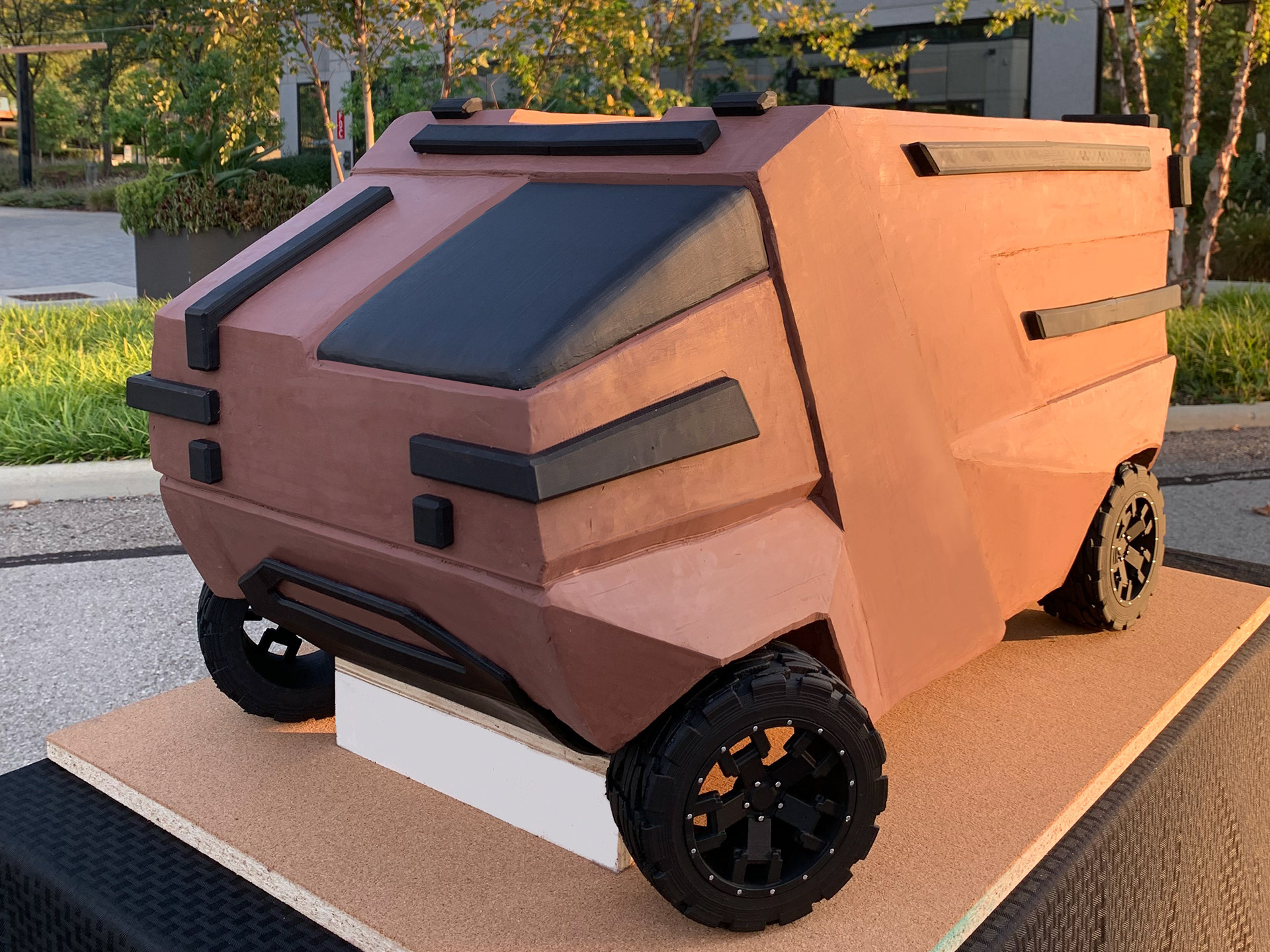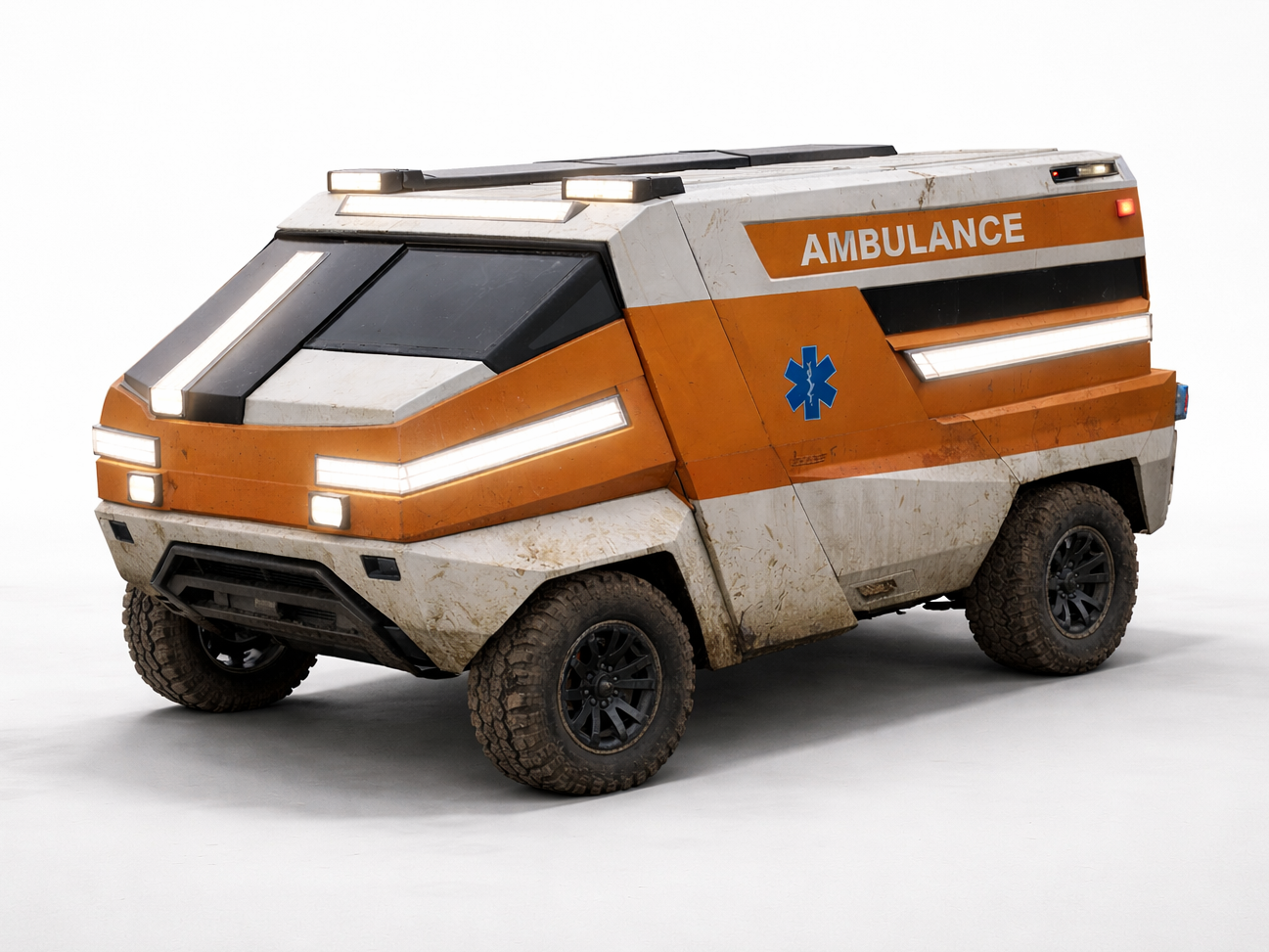
Watch a recording of my capstone presentation that goes in depth with the features of my design
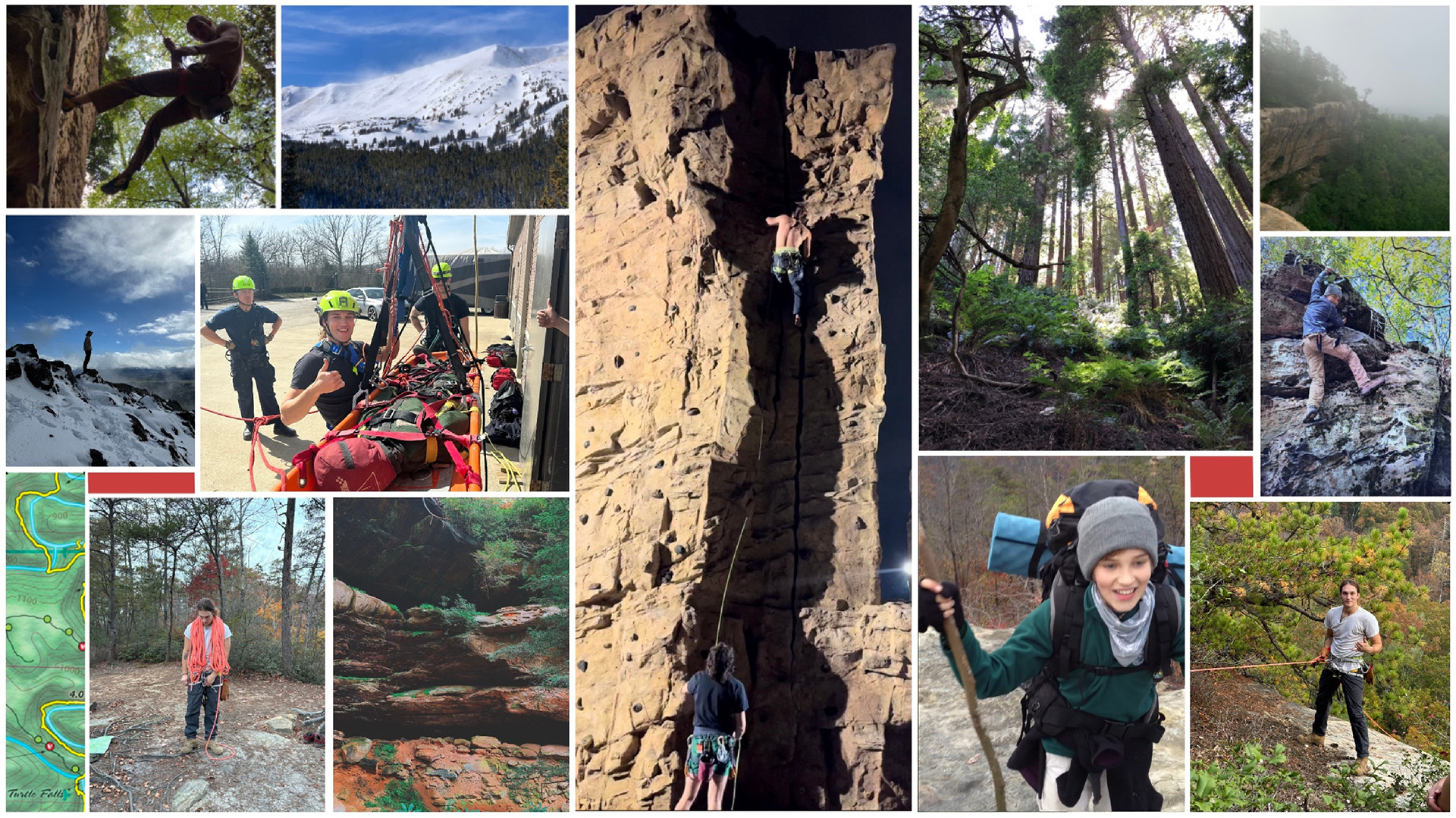
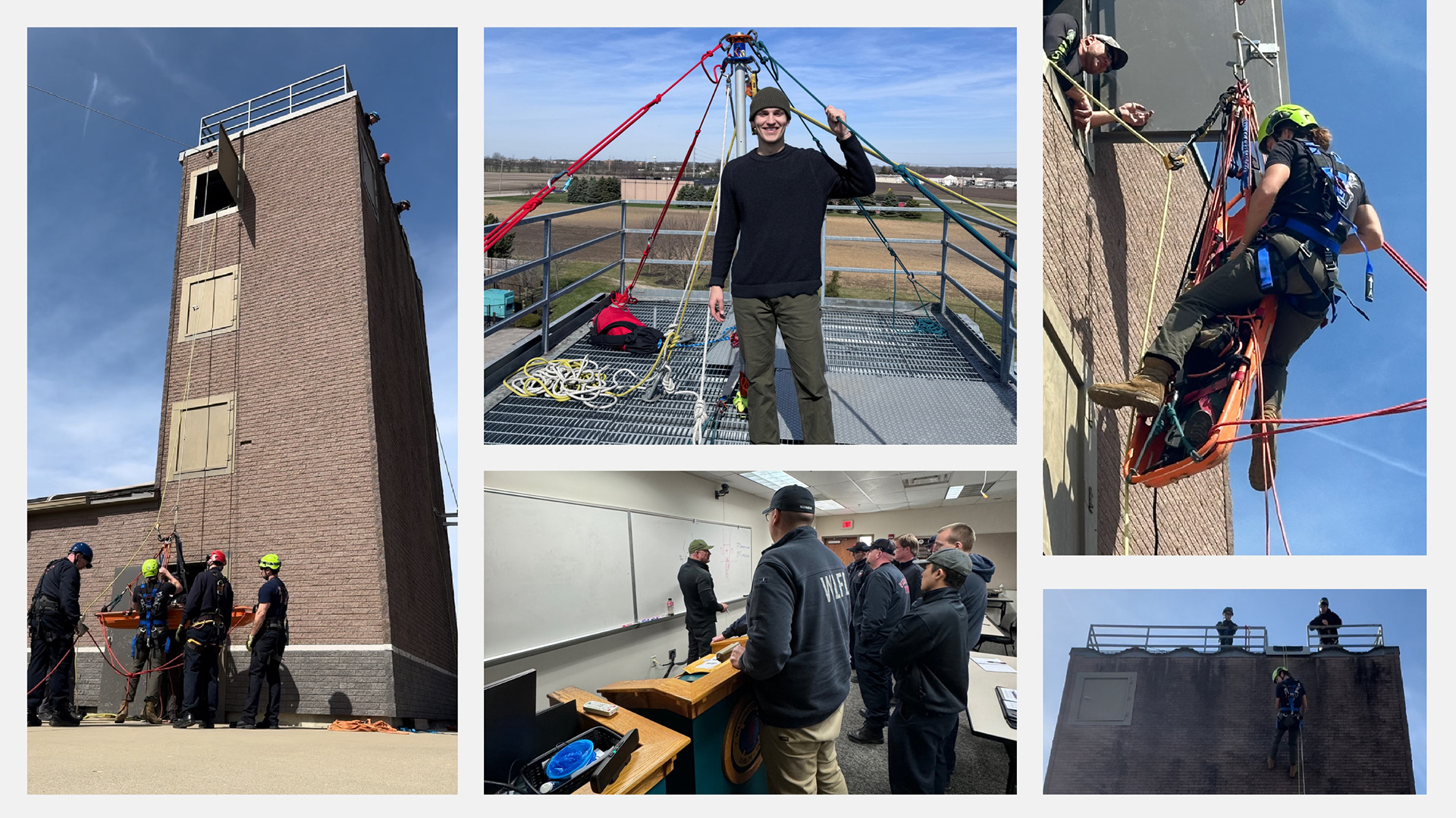
As an outdoor hobbyist, I have a personal investment in the solution. After being offered the opportunity to attend a high ropes rescue class, I got to experience the pain points user's face, which helped me with empathetic design. It was essential to design what the user needs, not what I want to give them.
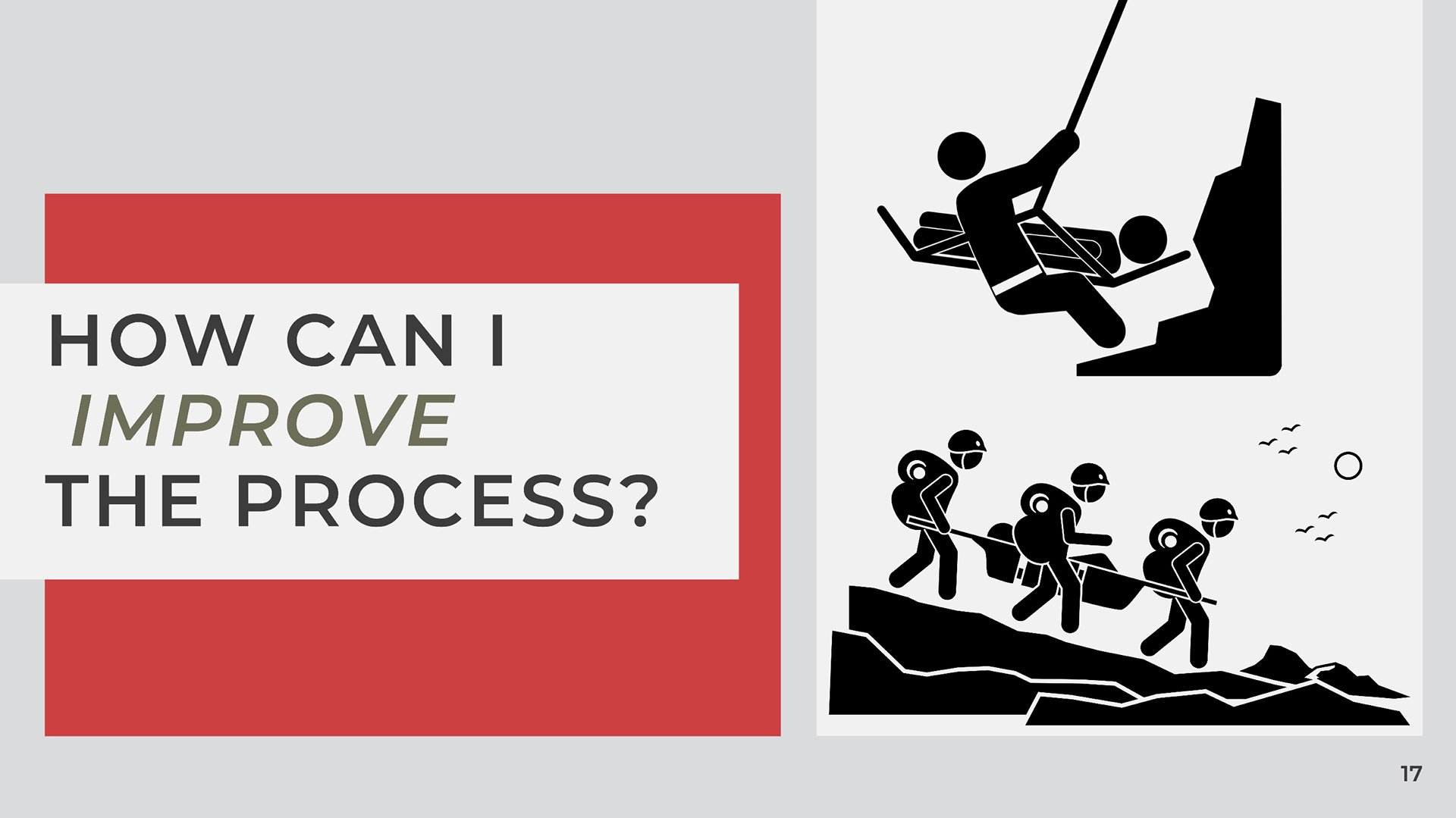
Problems within the rope and transport phase needed to be addressed in the design
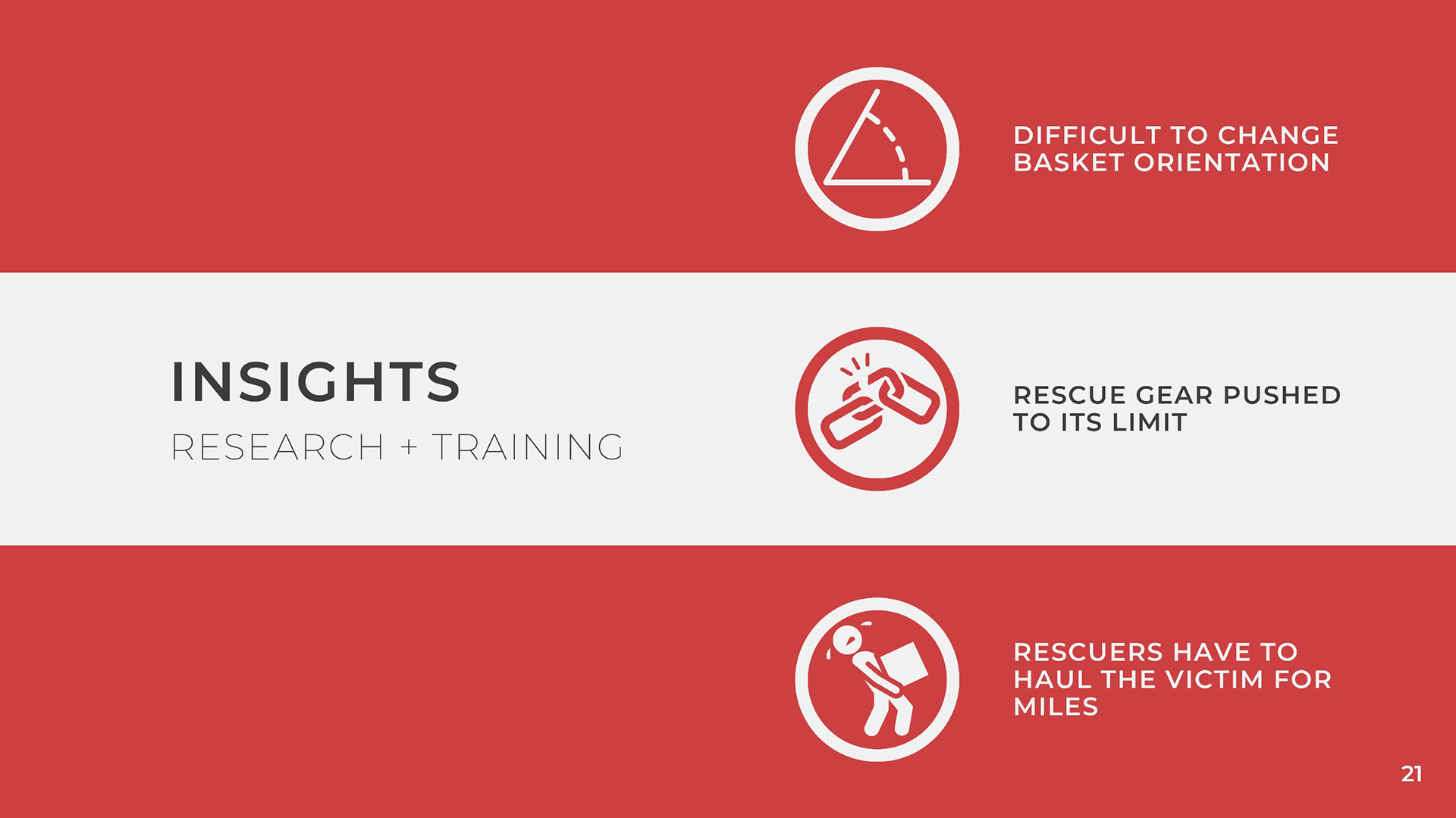
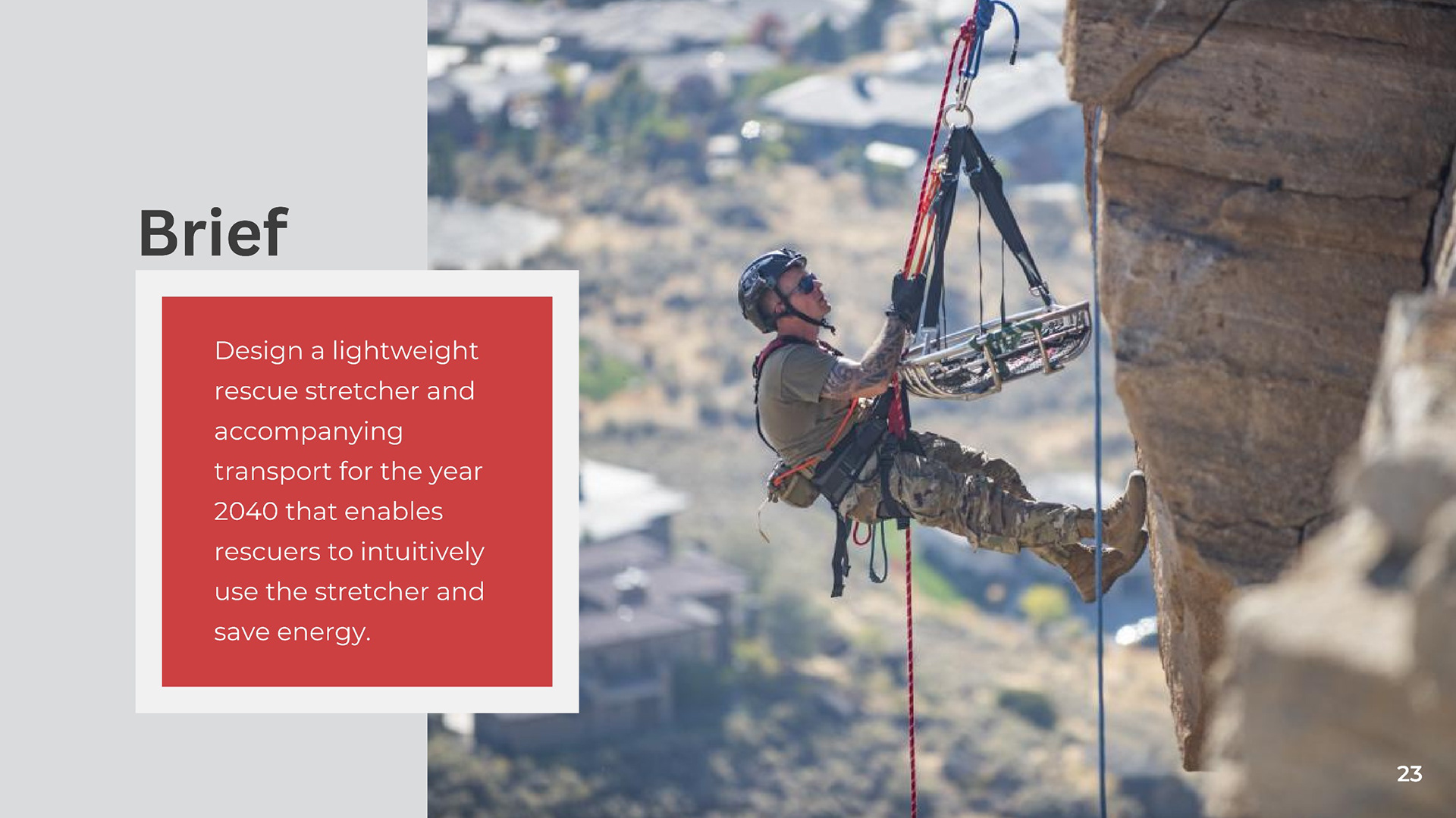
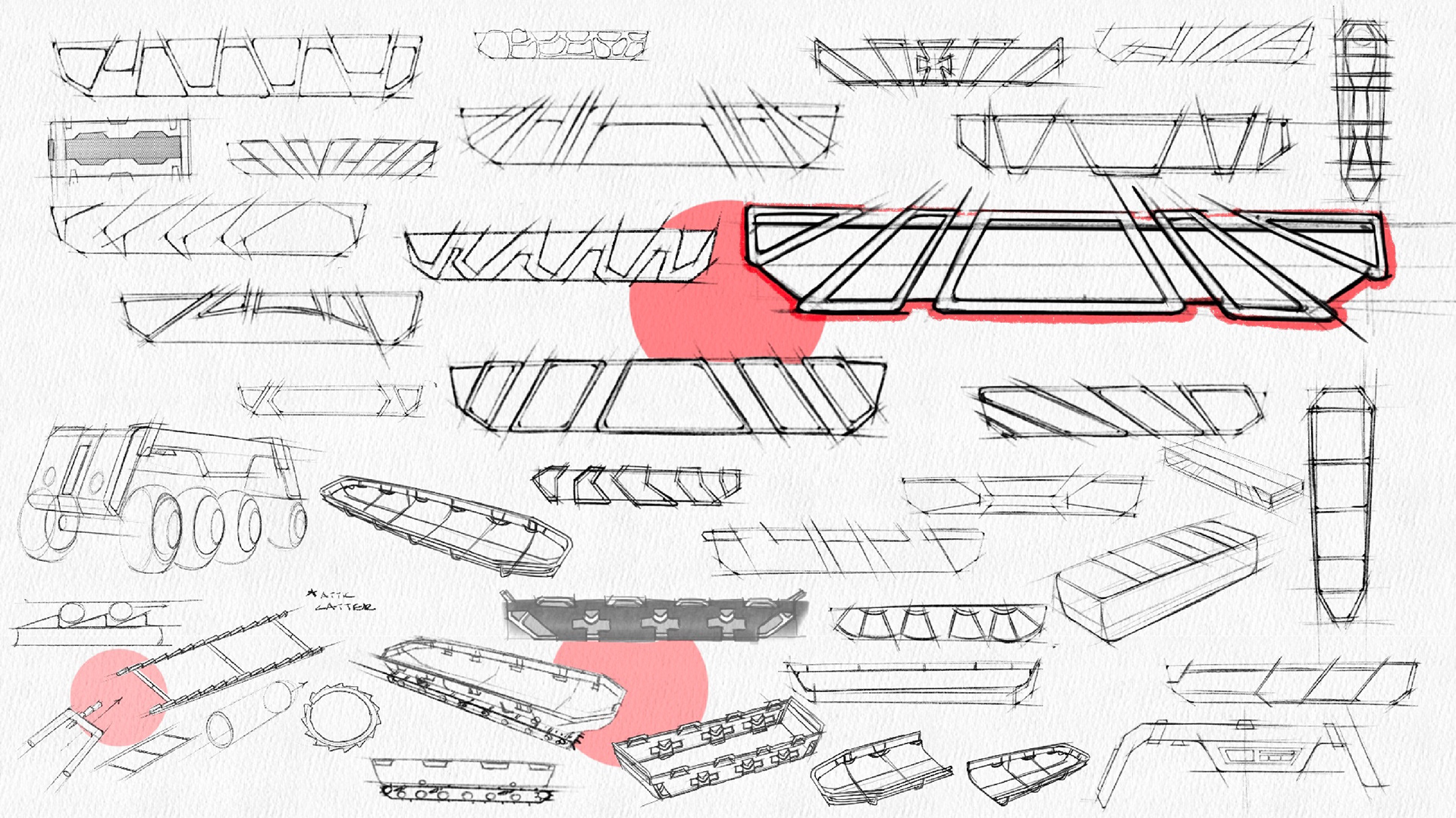
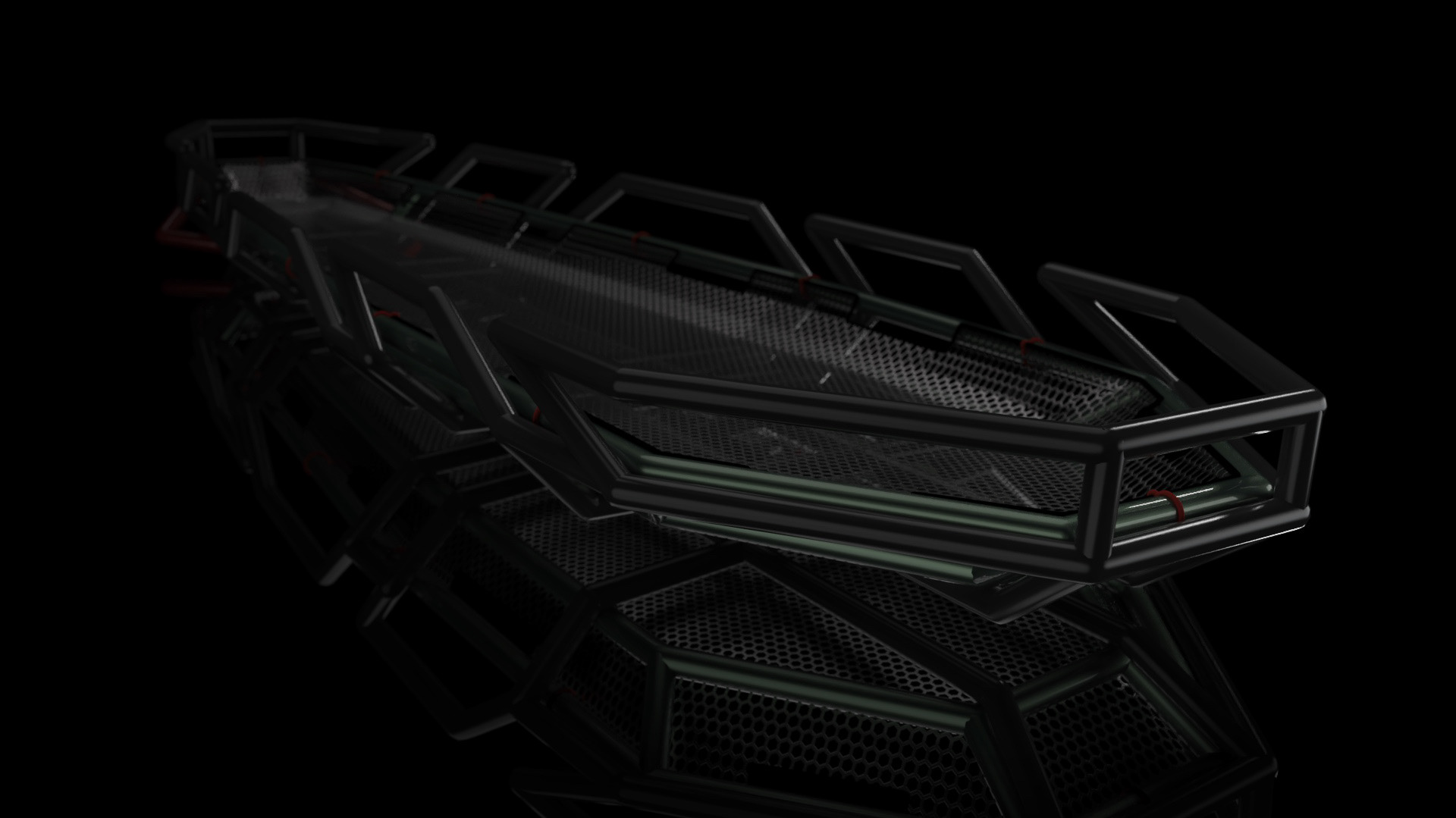
Concepts explored grip positioning, litter shape, angles of support bars, and other key features. A final concept was selected that provided a strong balance of weight, structural support, and versatile grip options for multiple carry positions. The chosen design achieved an aesthetic that felt both rugged and refined, fitting seamlessly into the outdoor rescue market alongside climbing and technical gear.
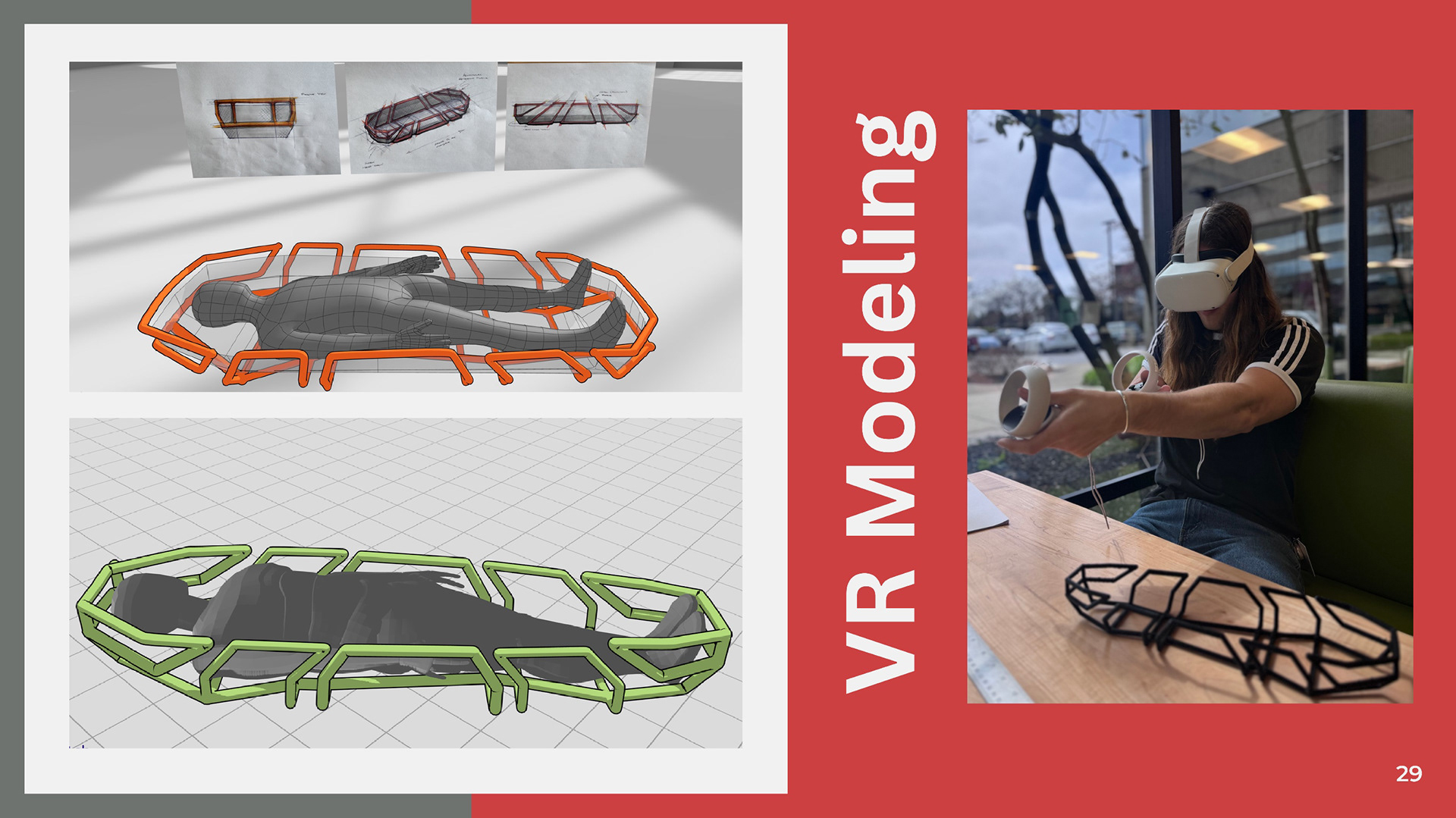
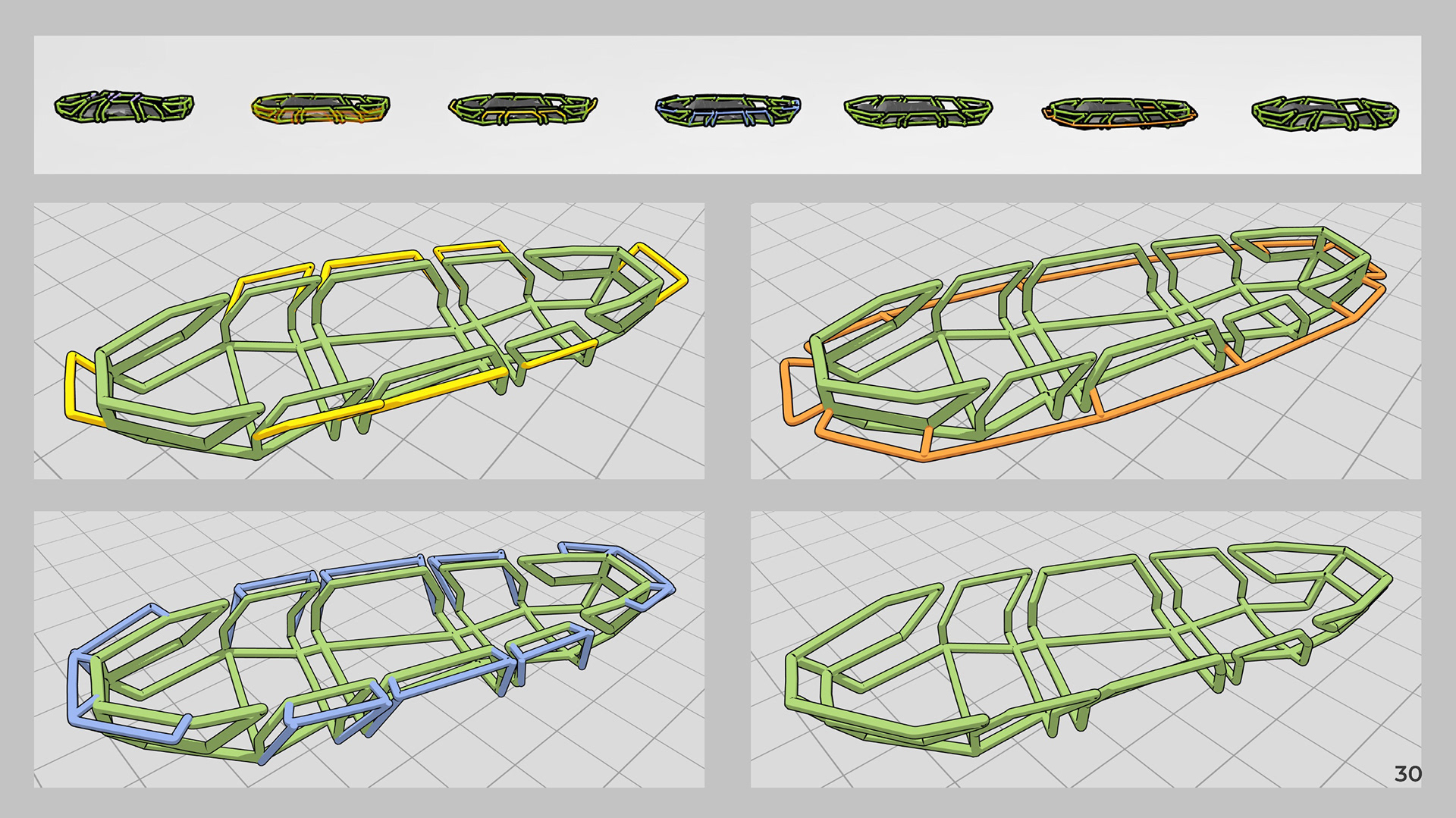
VR modeling allowed for rapid ideation and a stronger understanding of scale and proportion. Additional attachment points and handles were explored, but these additions created unnecessary bulk and potential snag points for ropes and harnesses. The concept advanced with a streamlined, low-profile design, foot placements and handles were refined to ensure smooth contact surfaces that allow ropes and harnesses to glide freely without obstruction.
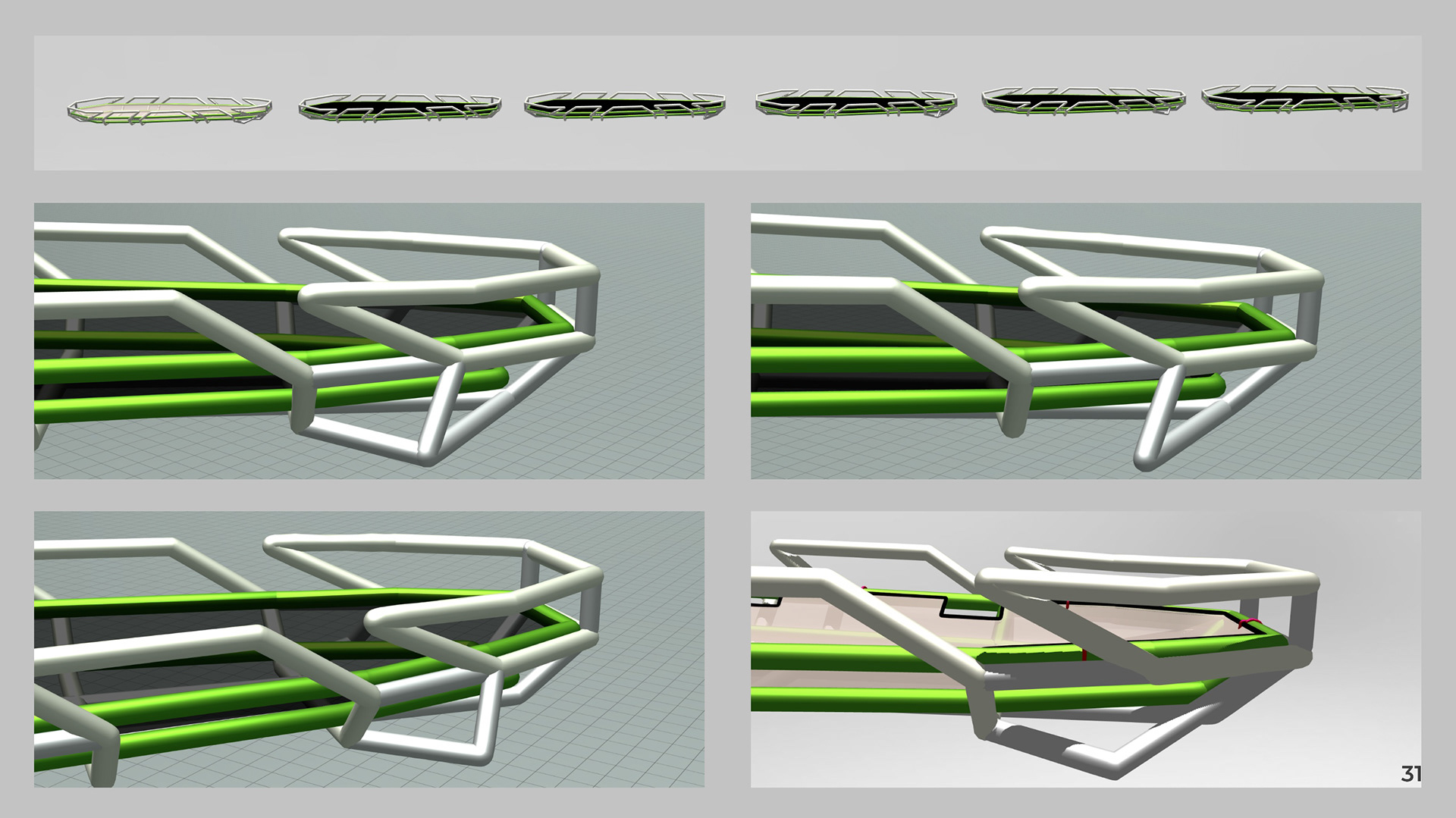
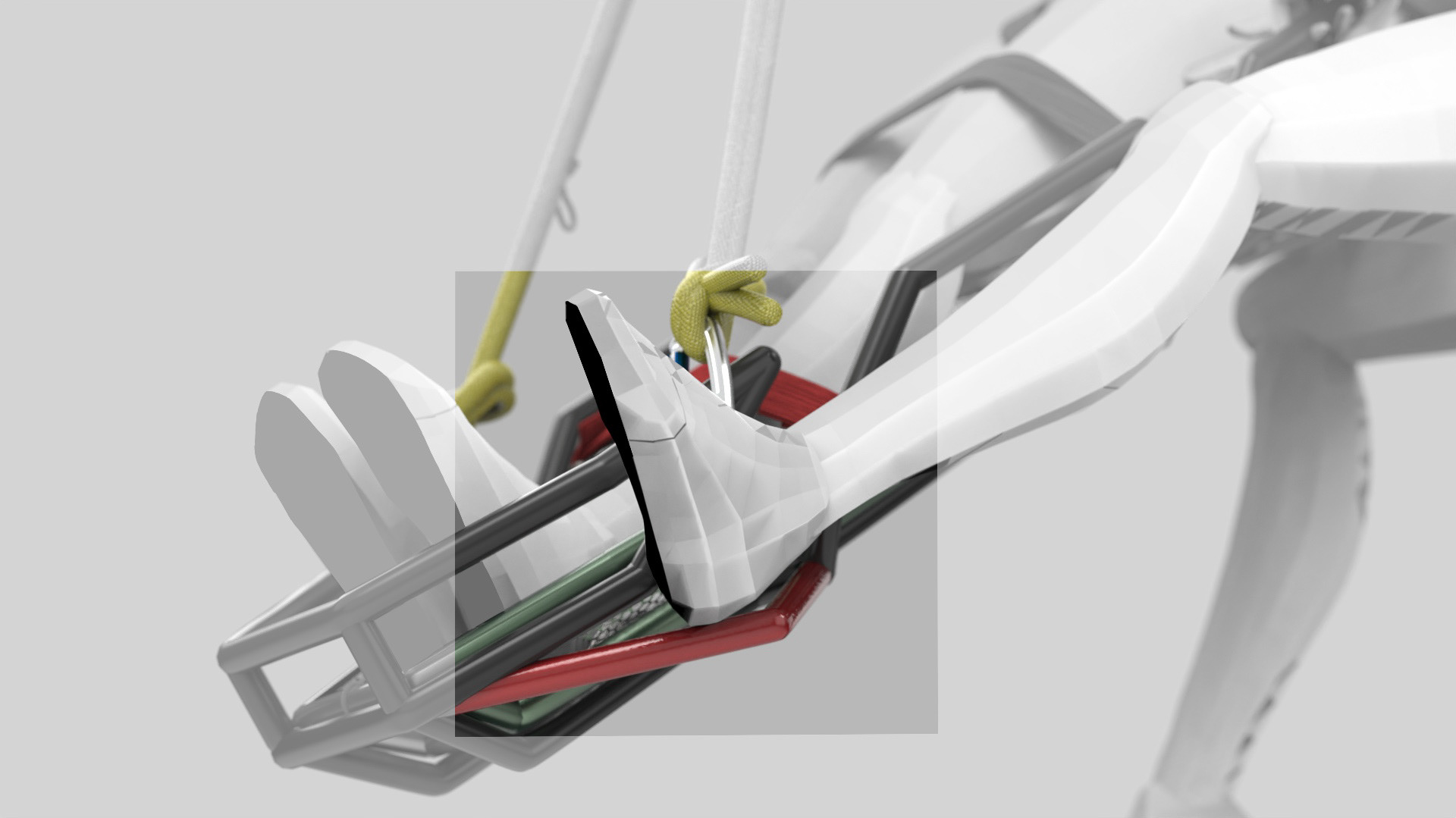
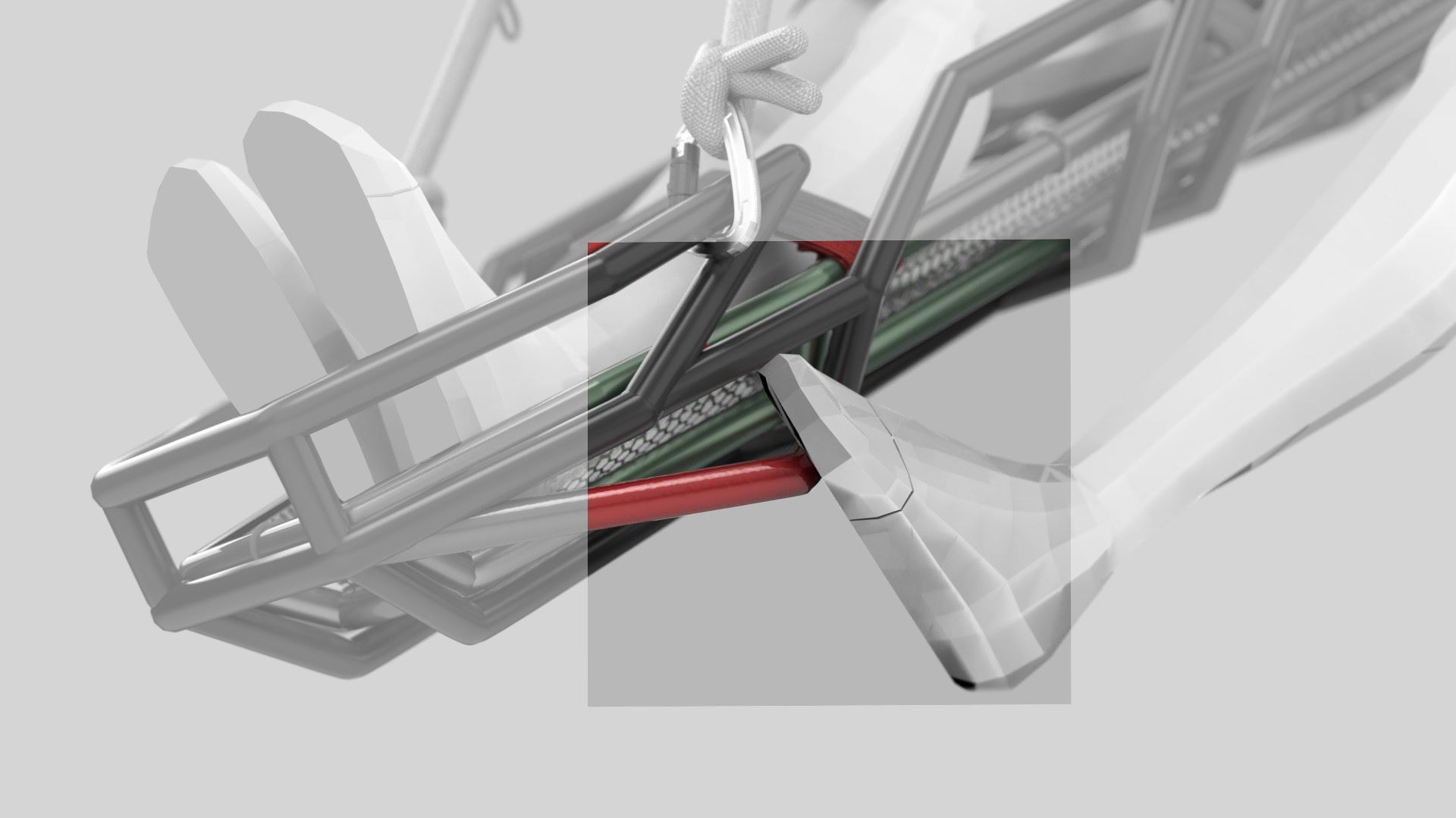
To address the challenge of changing the litter’s orientation, a low-profile foot plant was introduced at the foot of the litter. Its angled geometry allows access from multiple orientations while preventing ropes and harnesses from snagging. The result is a simple, effective solution that improves maneuverability and safety during rescue operations.
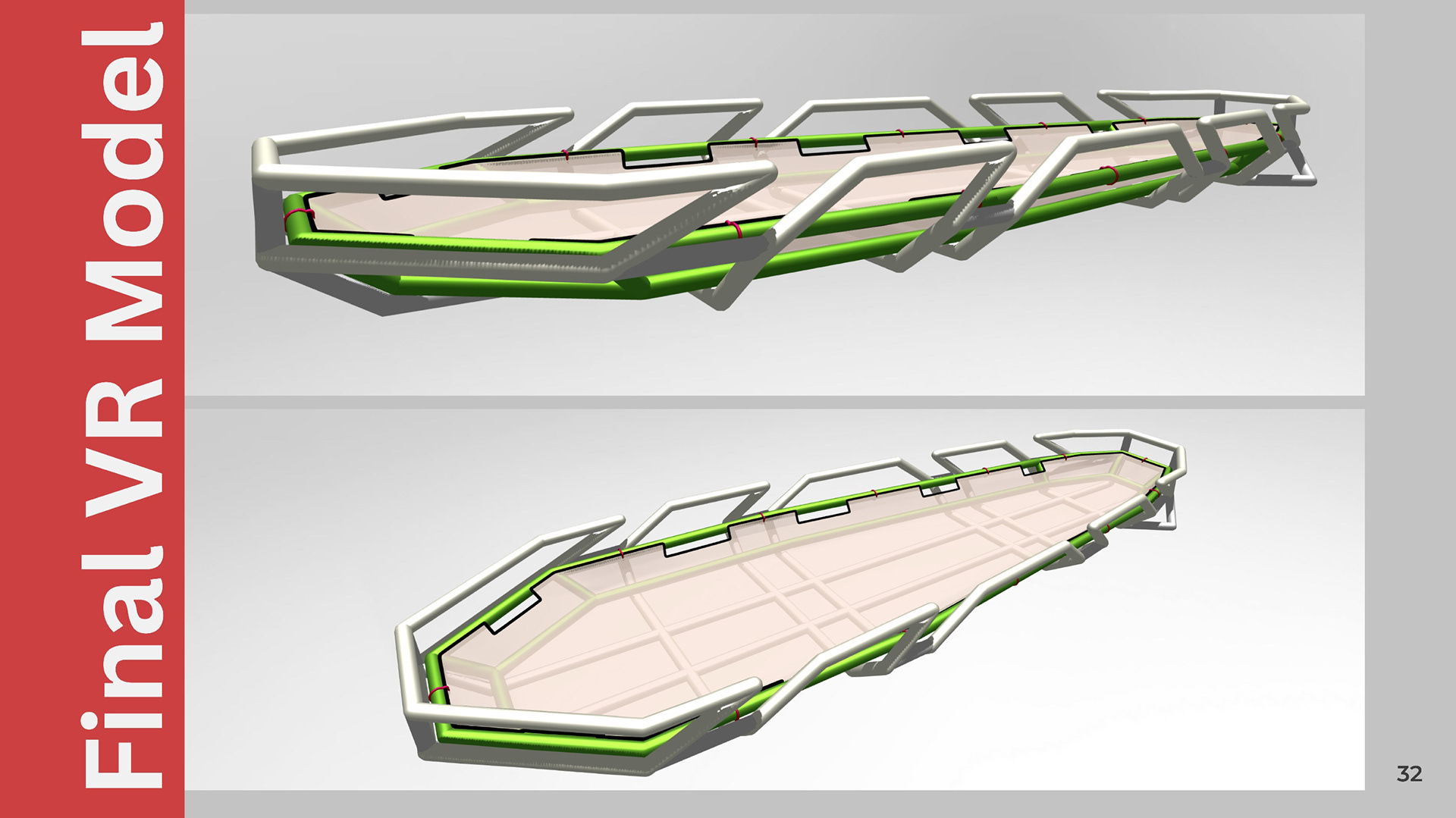
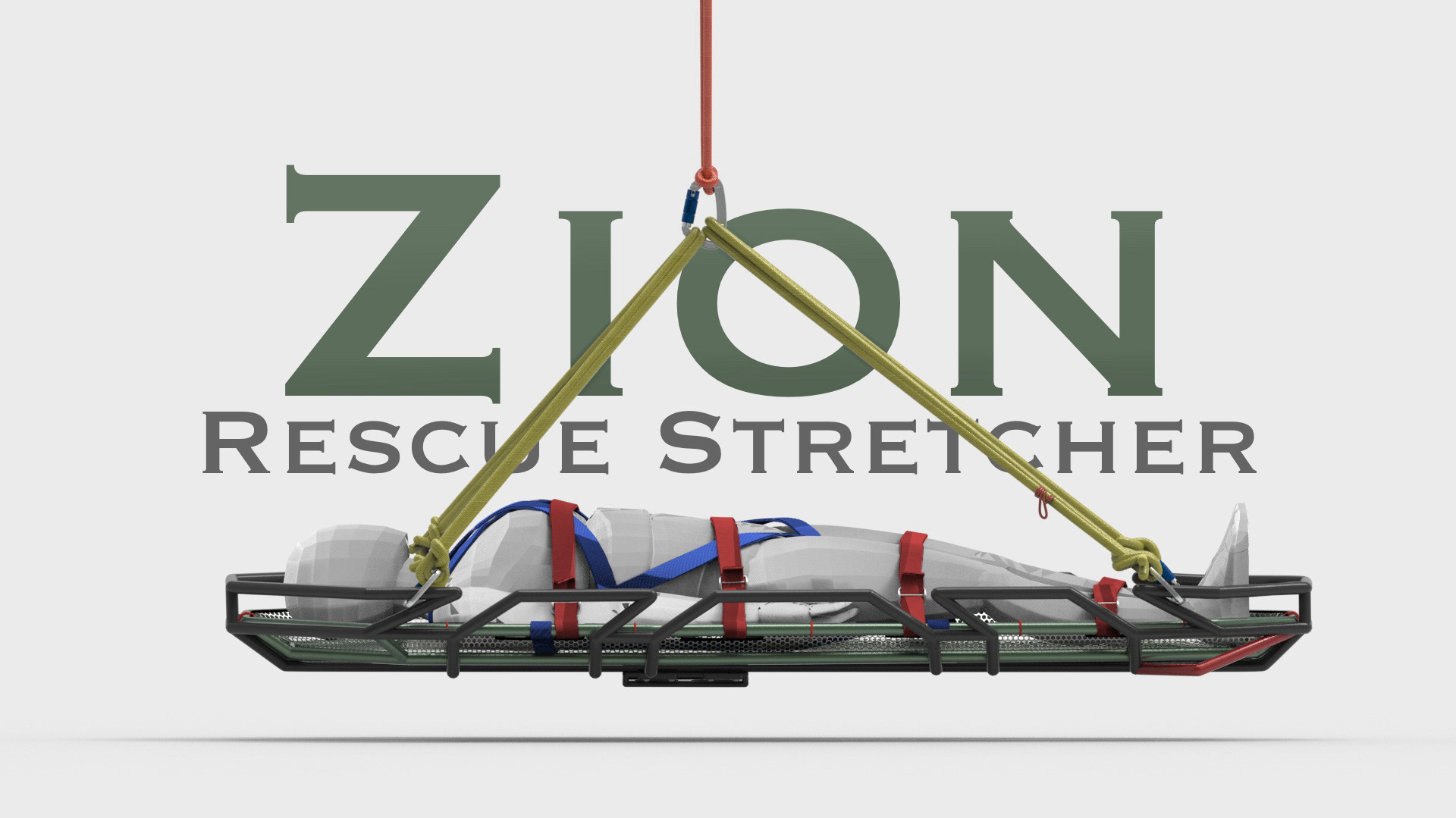
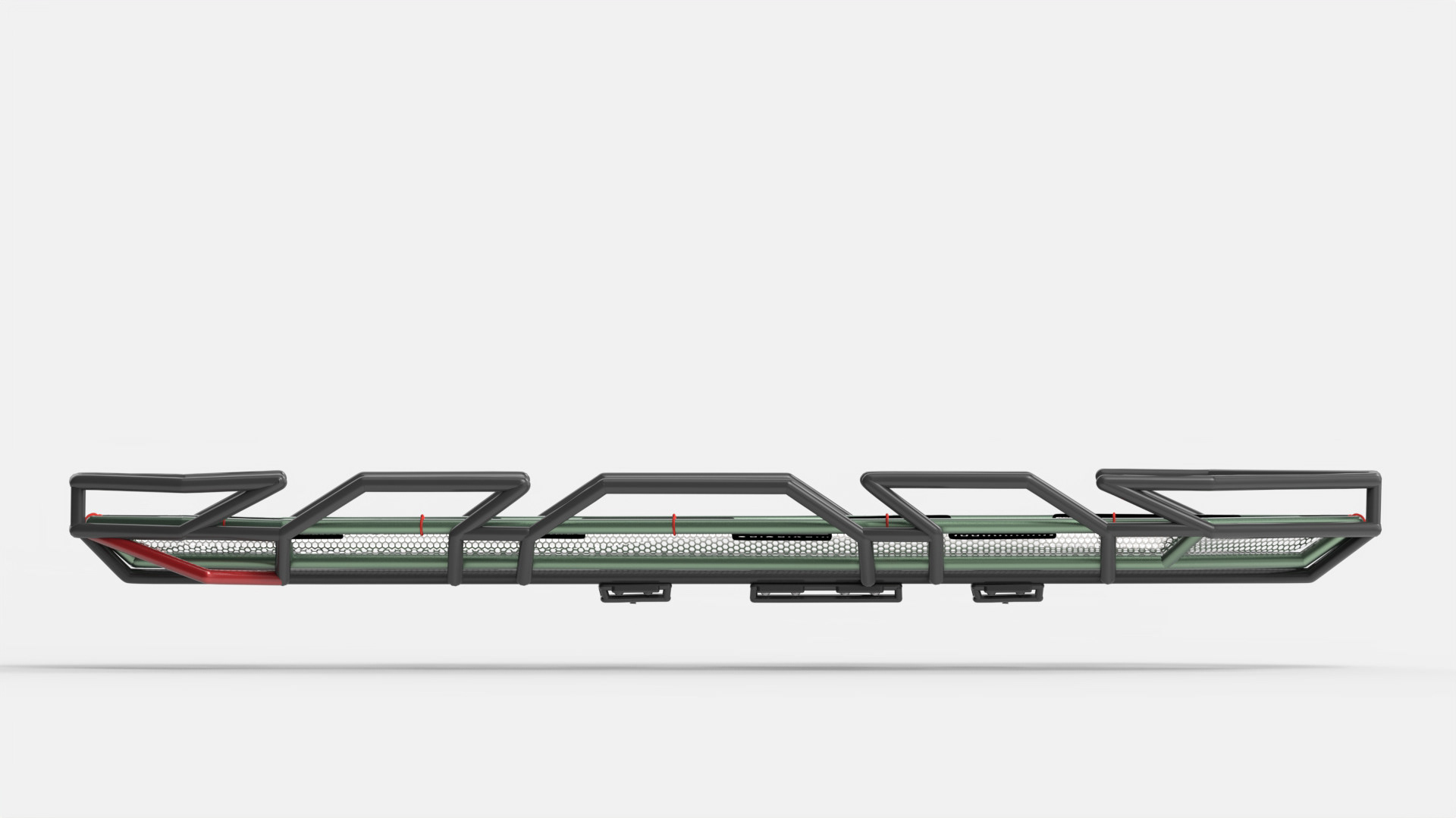
Images in this project are rendered in Keyshot and Procreate.
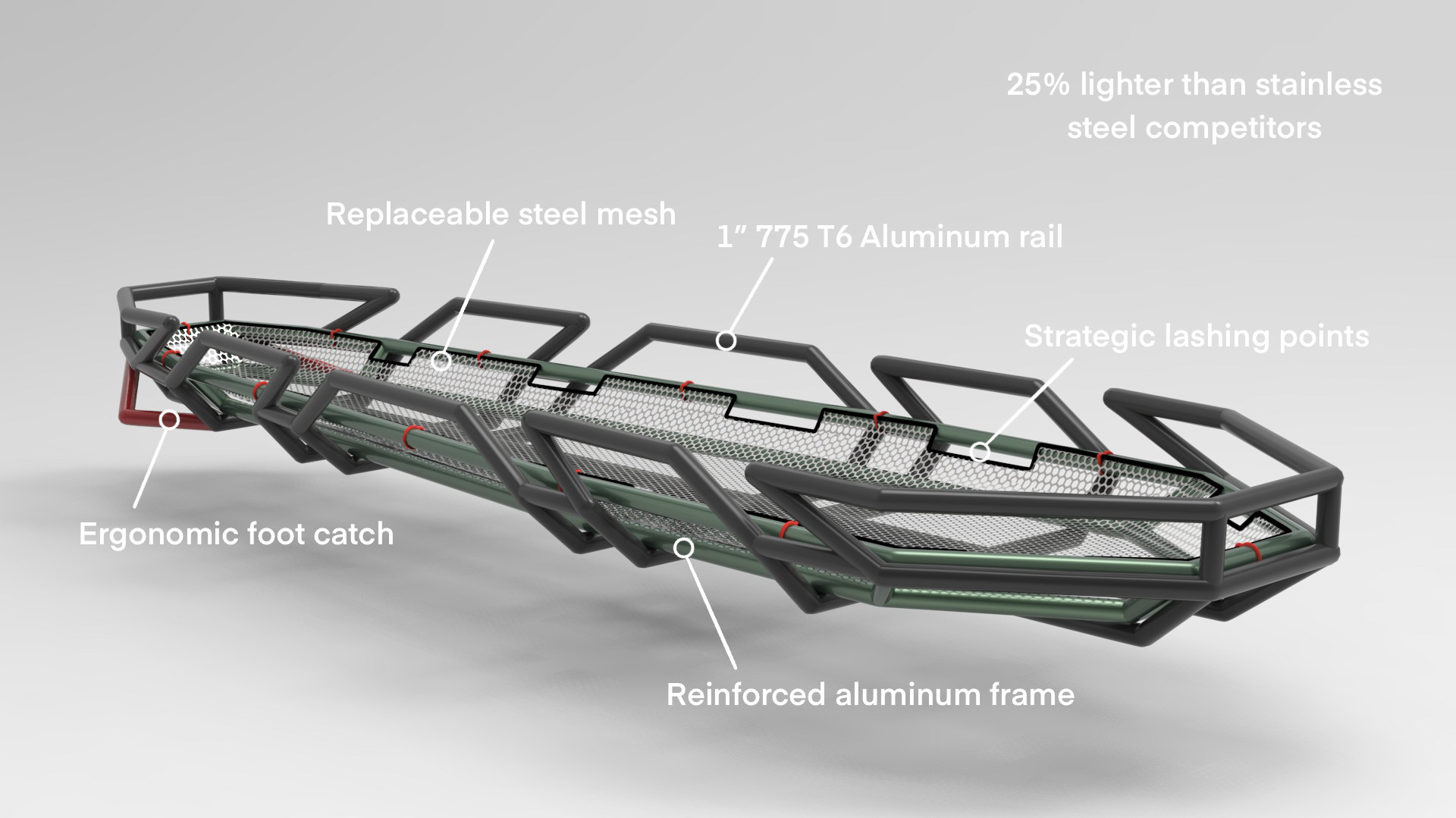
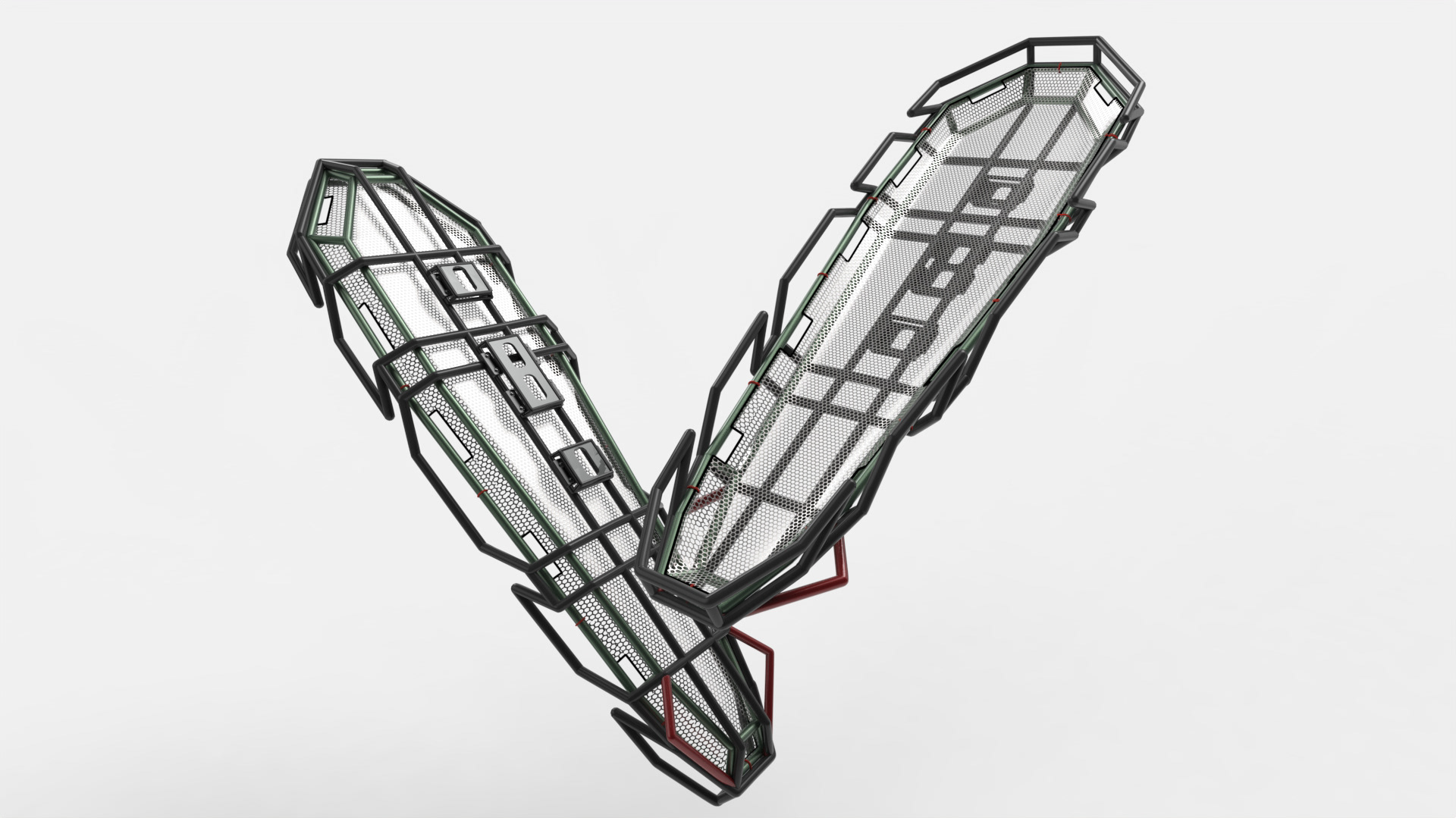
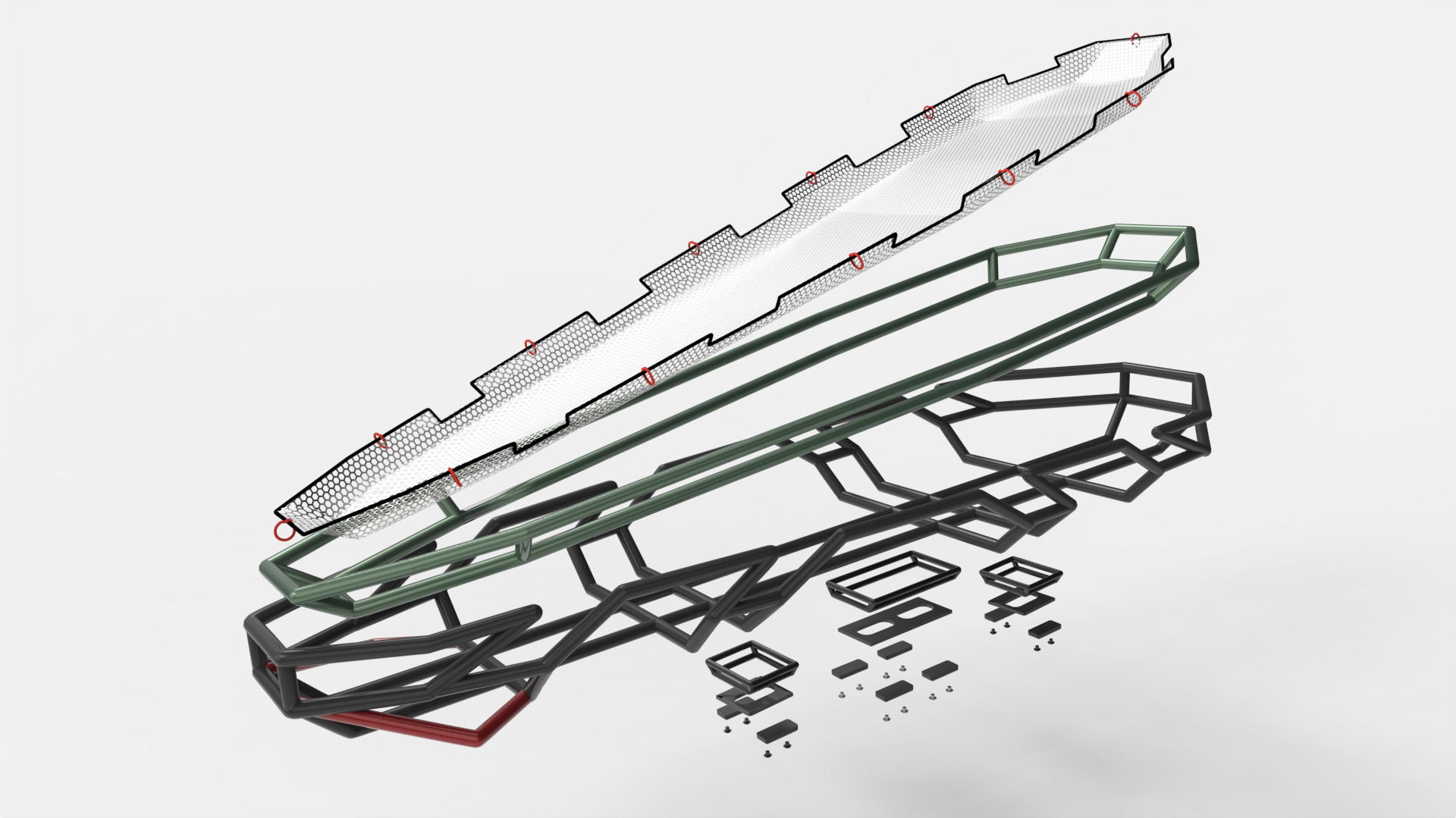
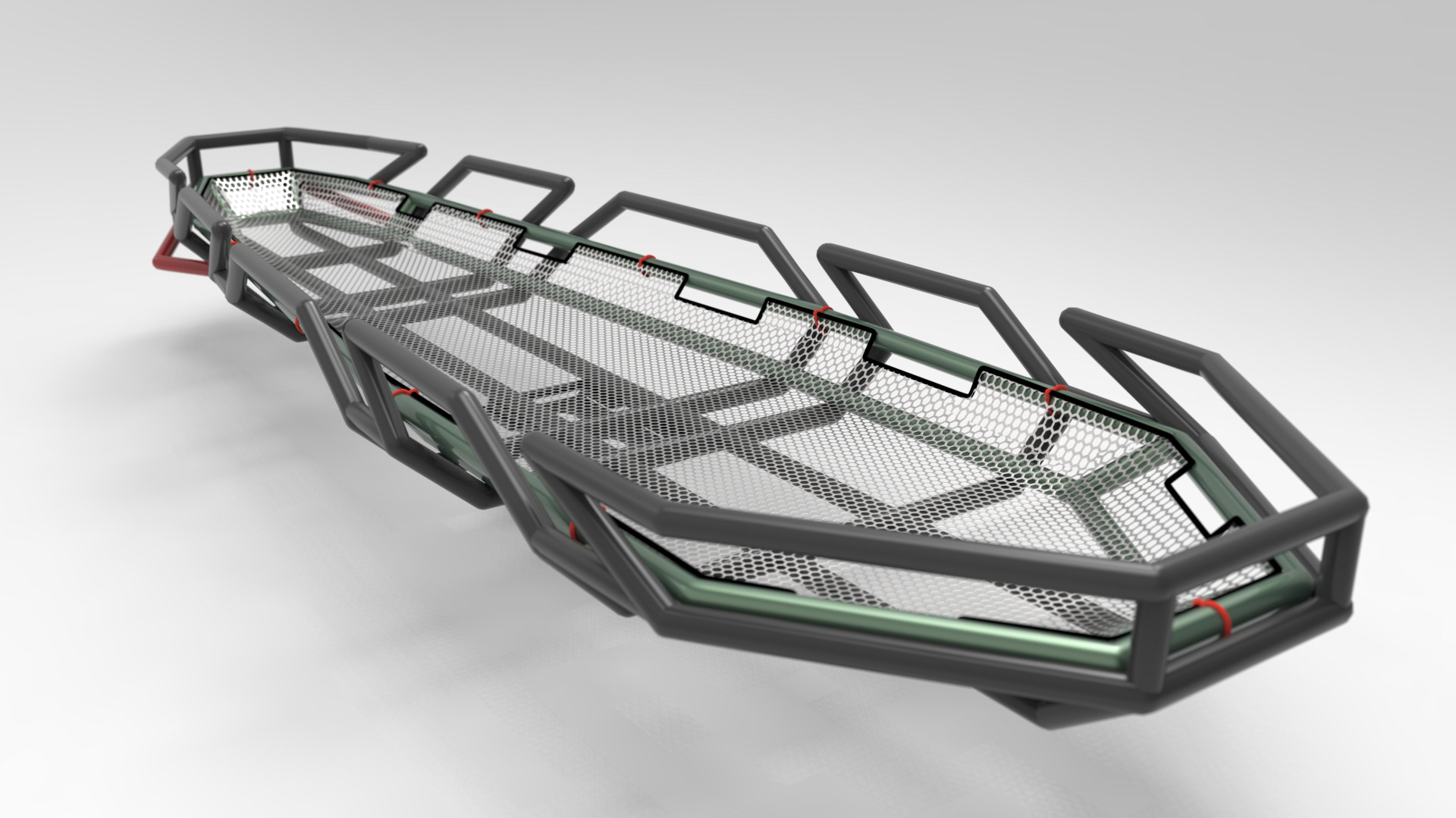
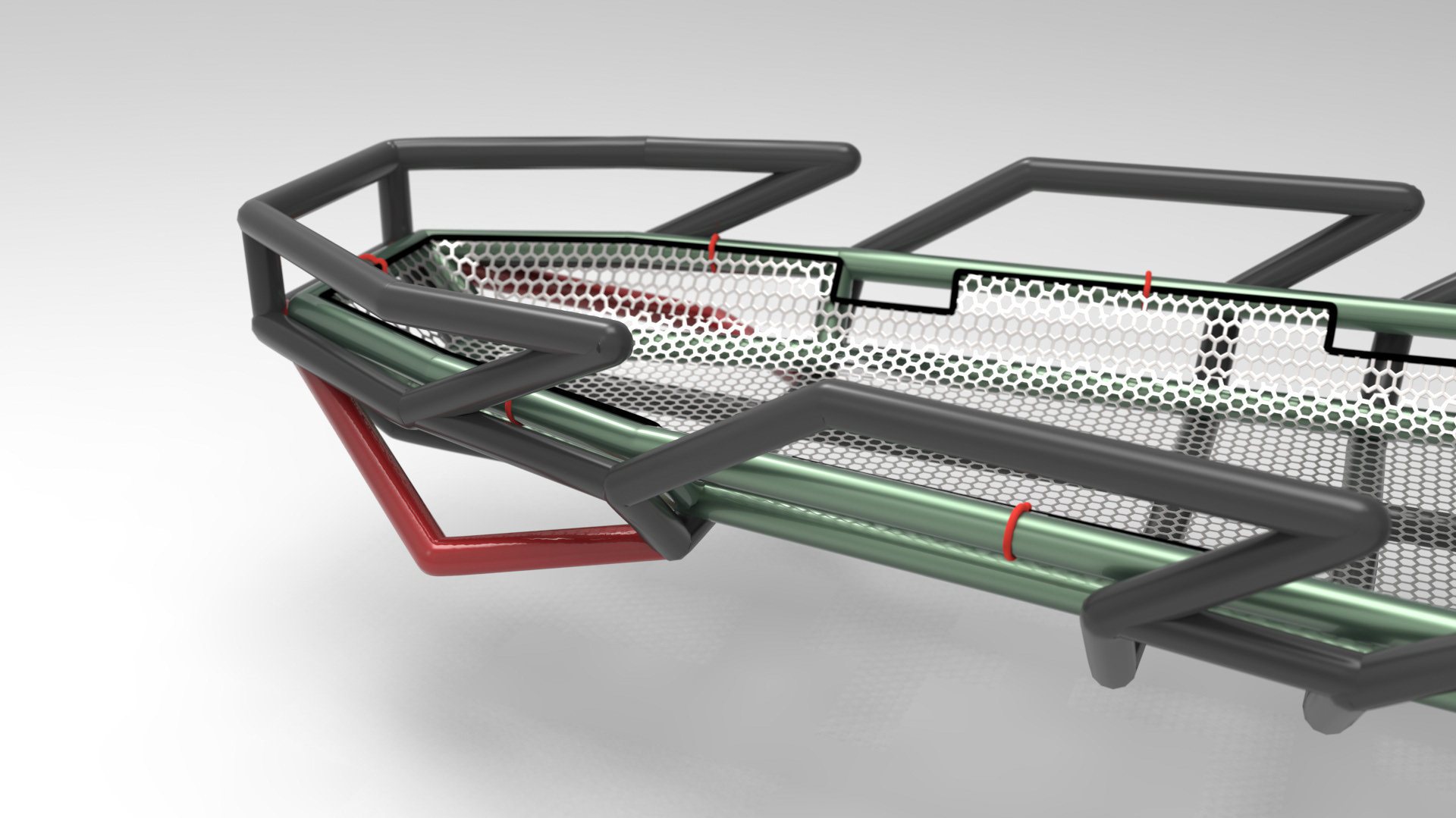
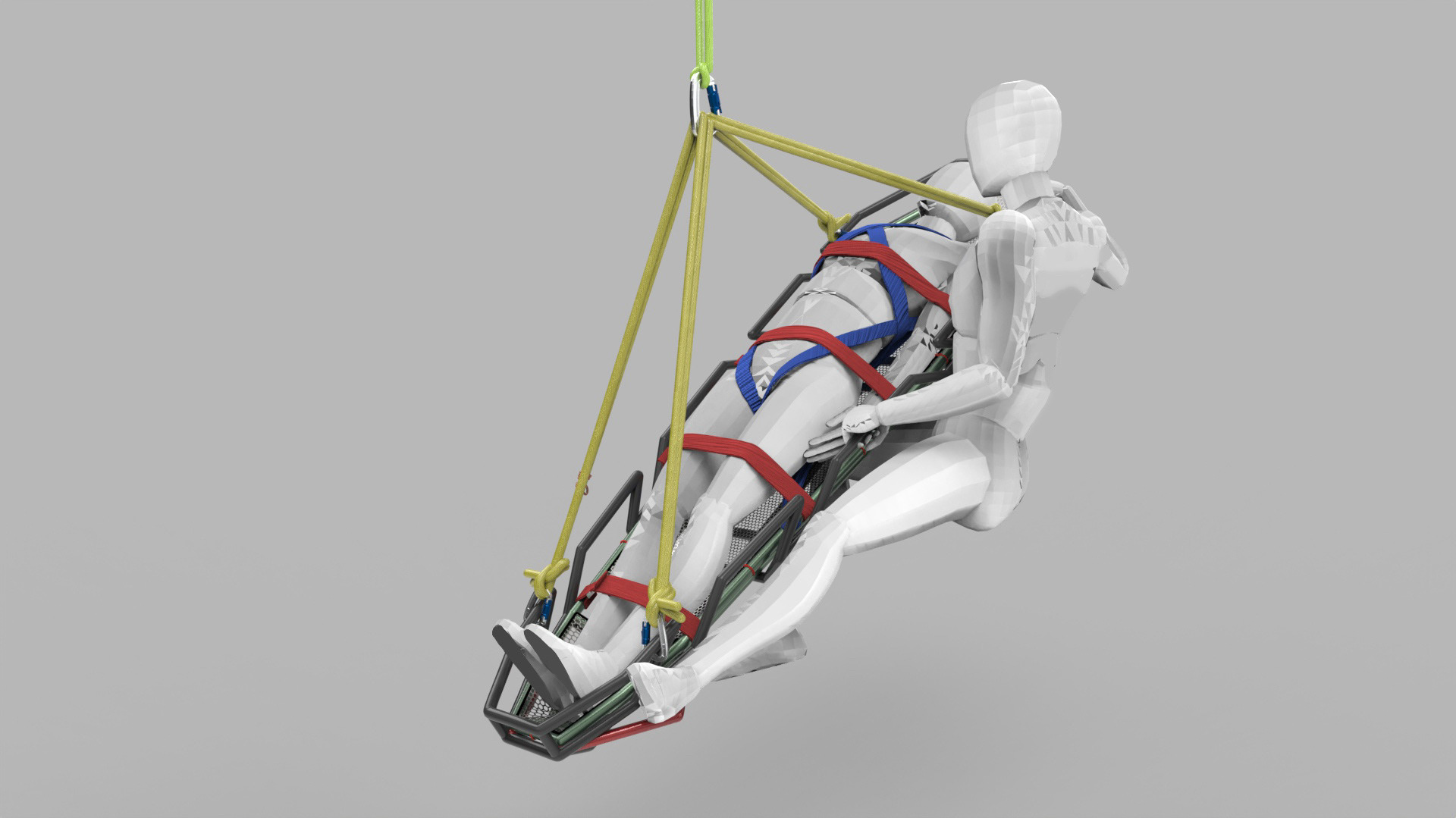

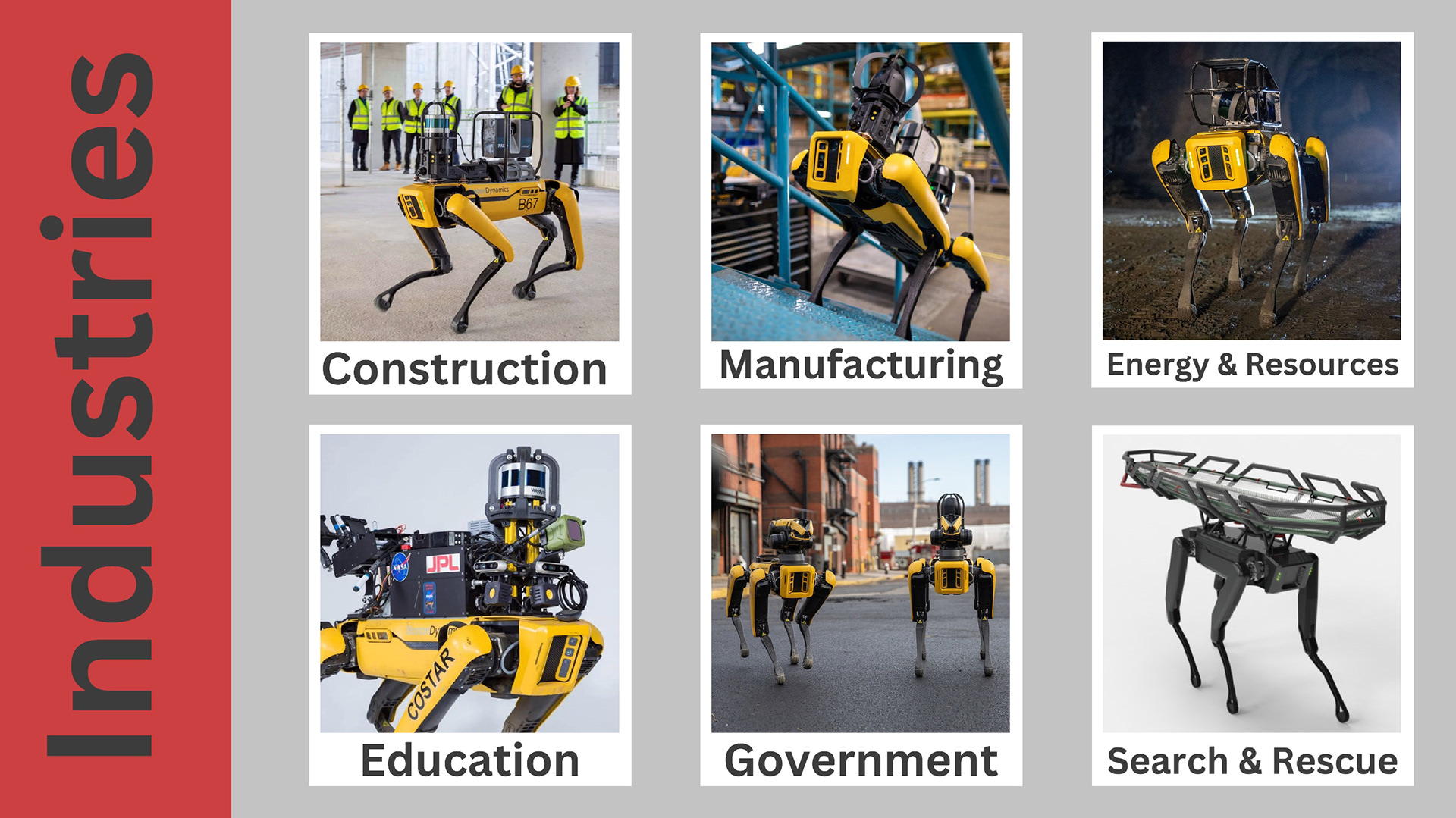
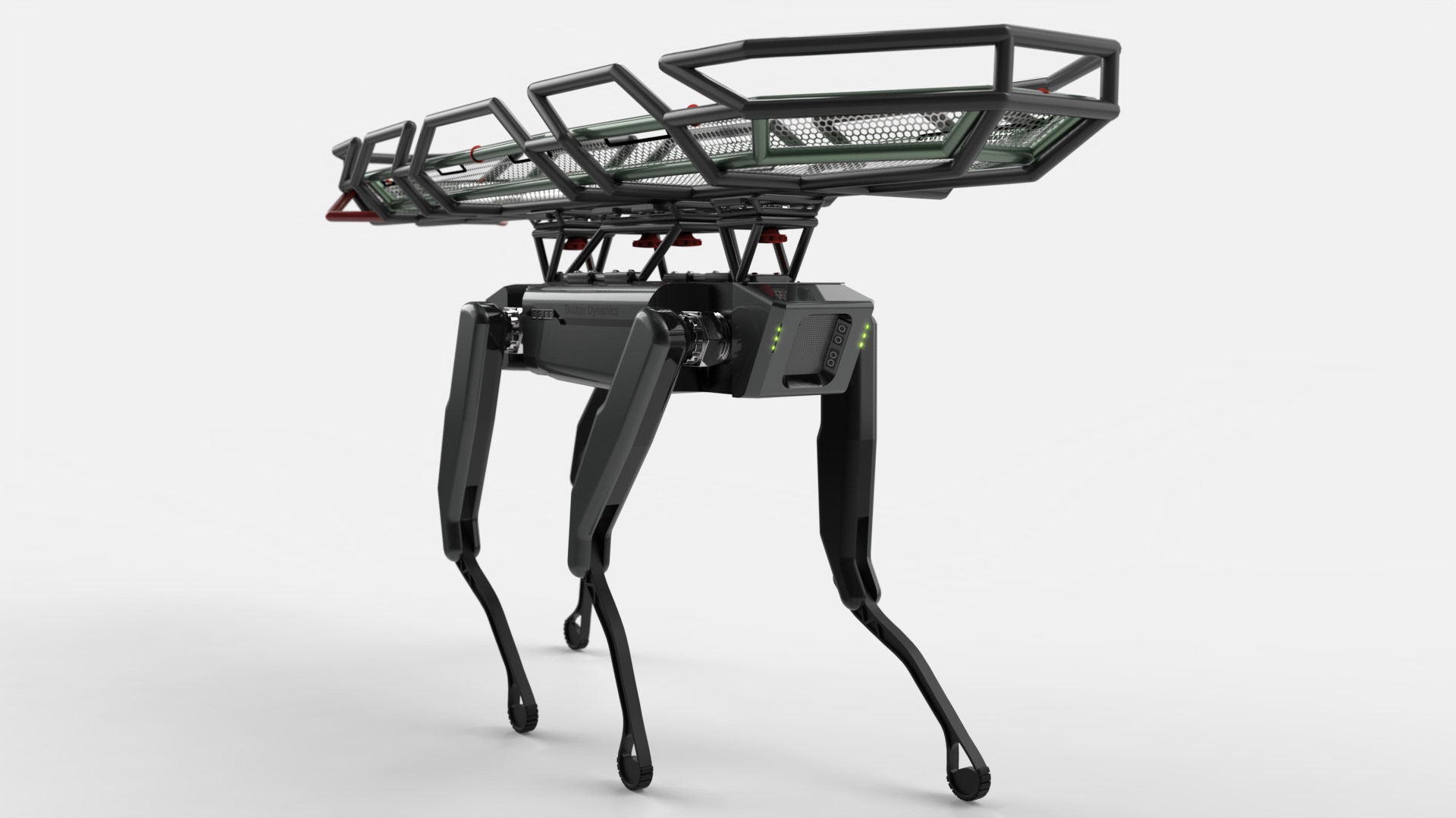
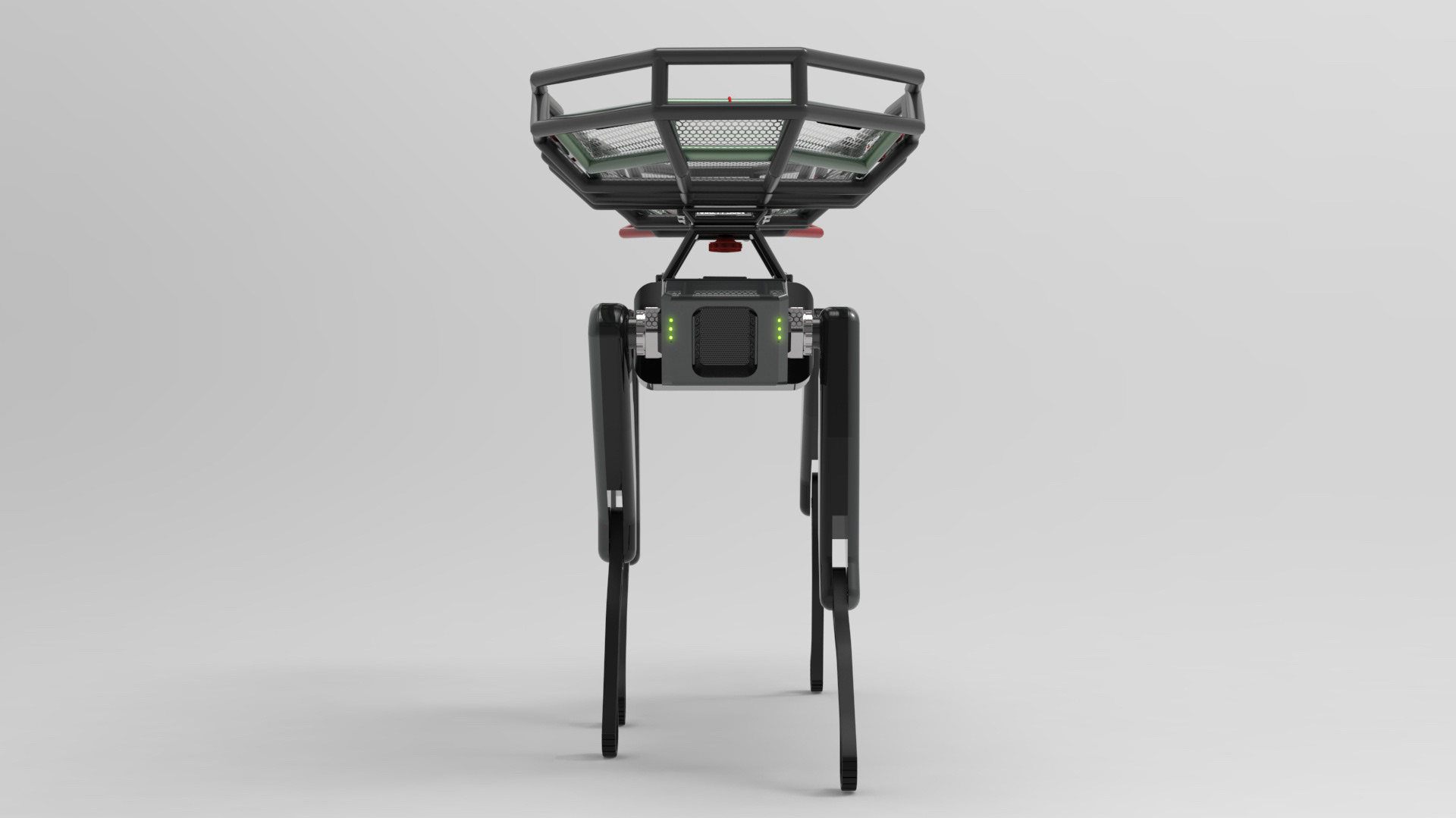
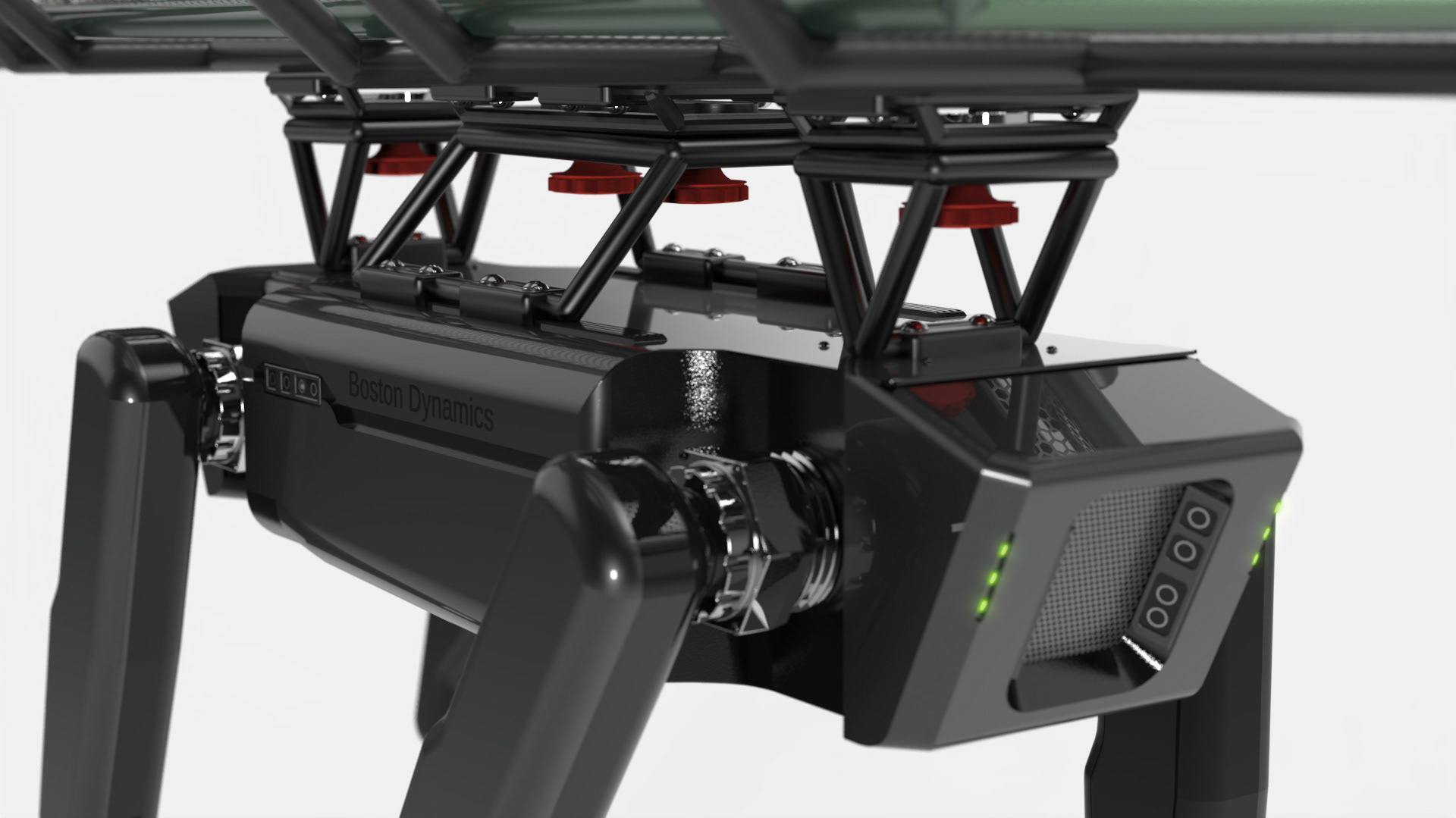
The Zion Rescue Stretcher is mounted by a proprietary mounting system designed specifically for this project.
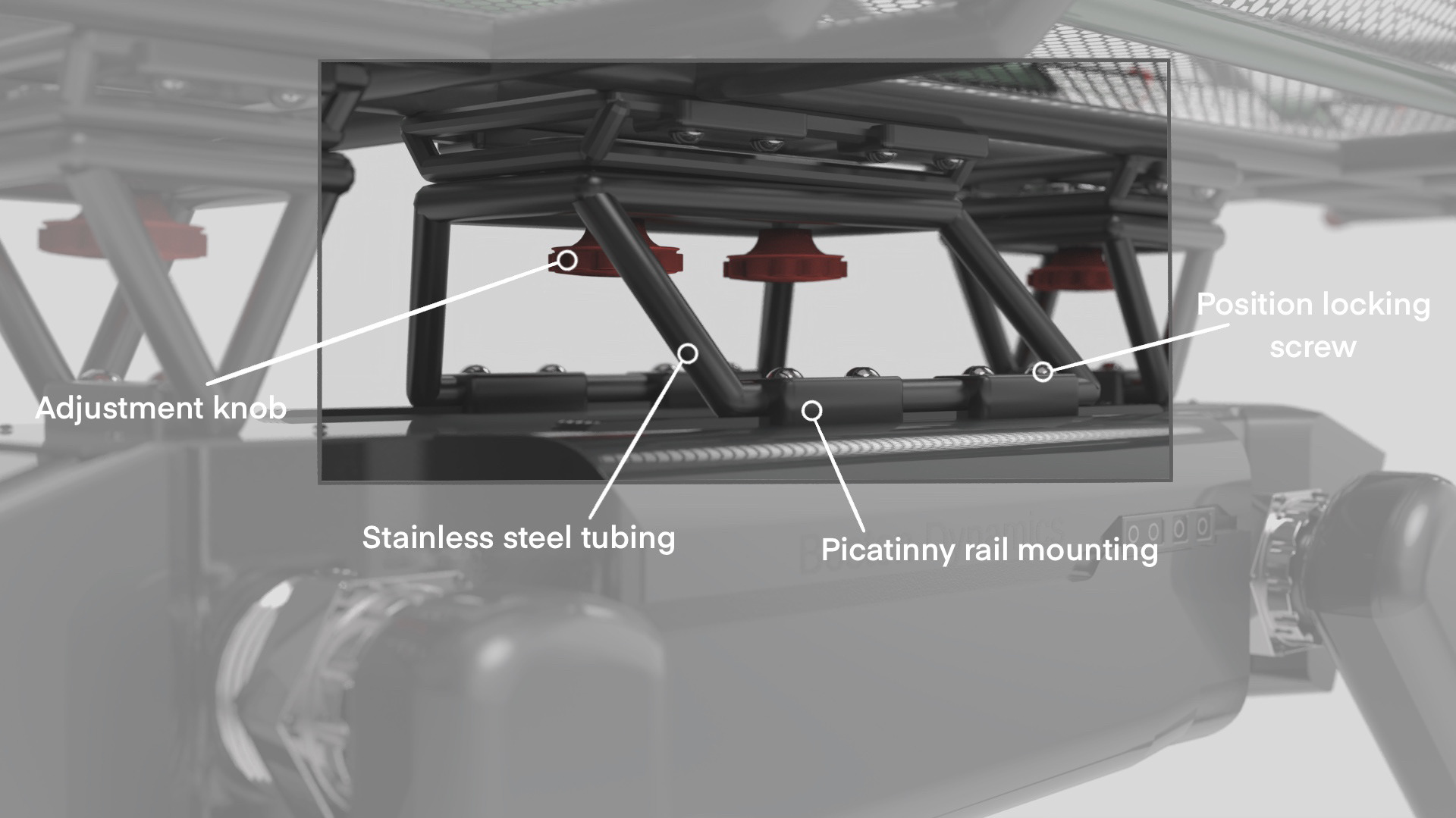
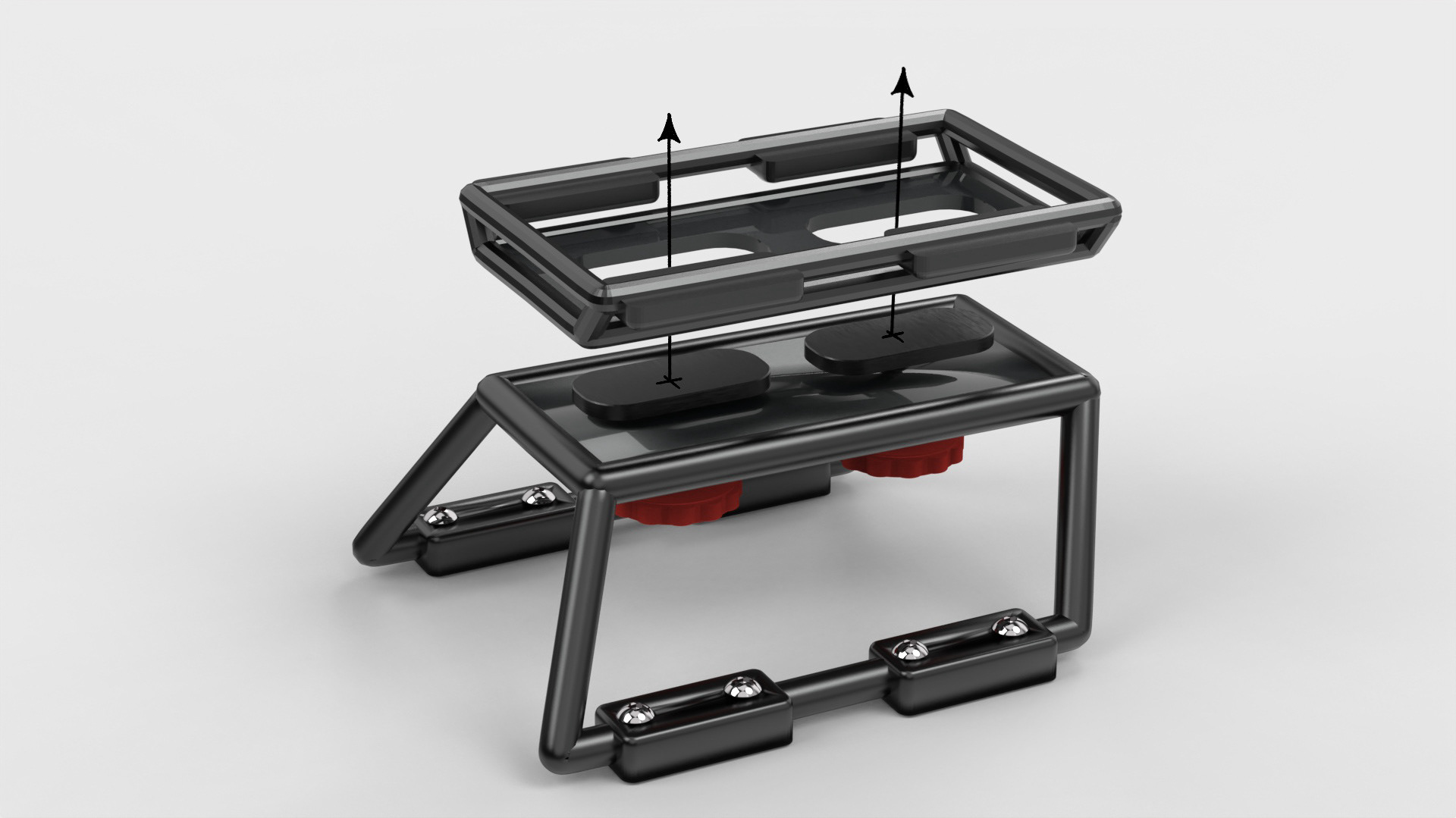
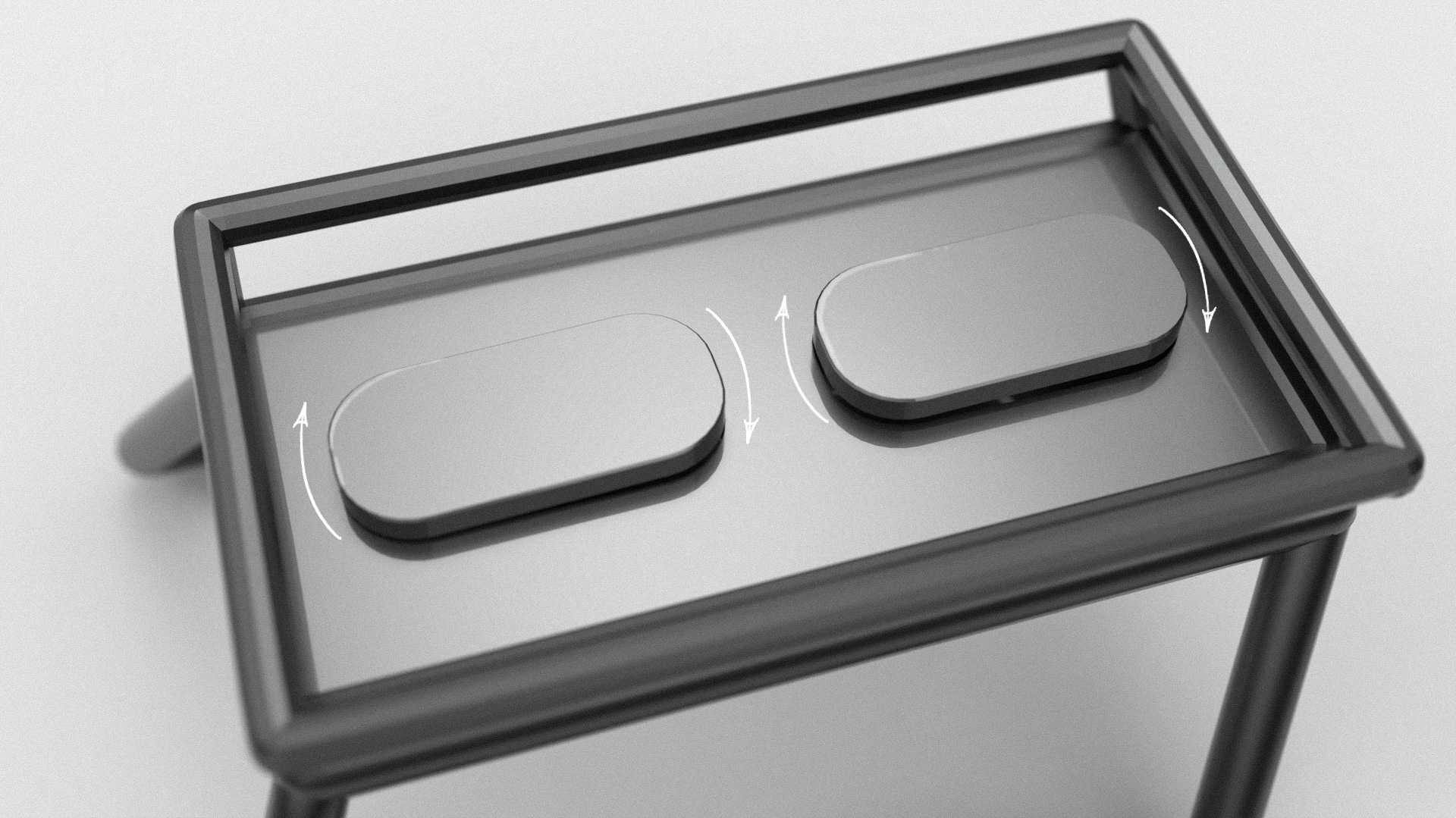
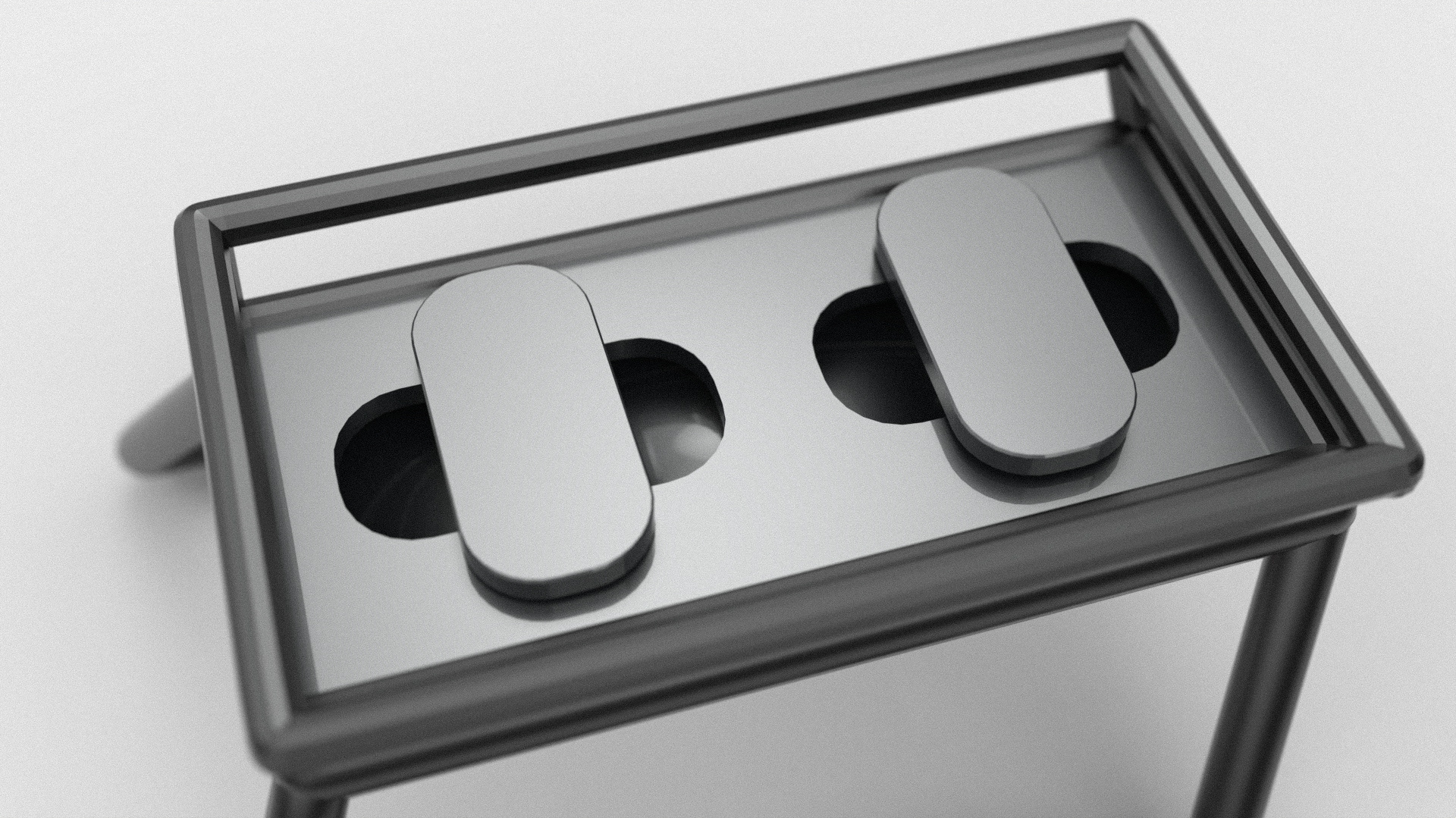
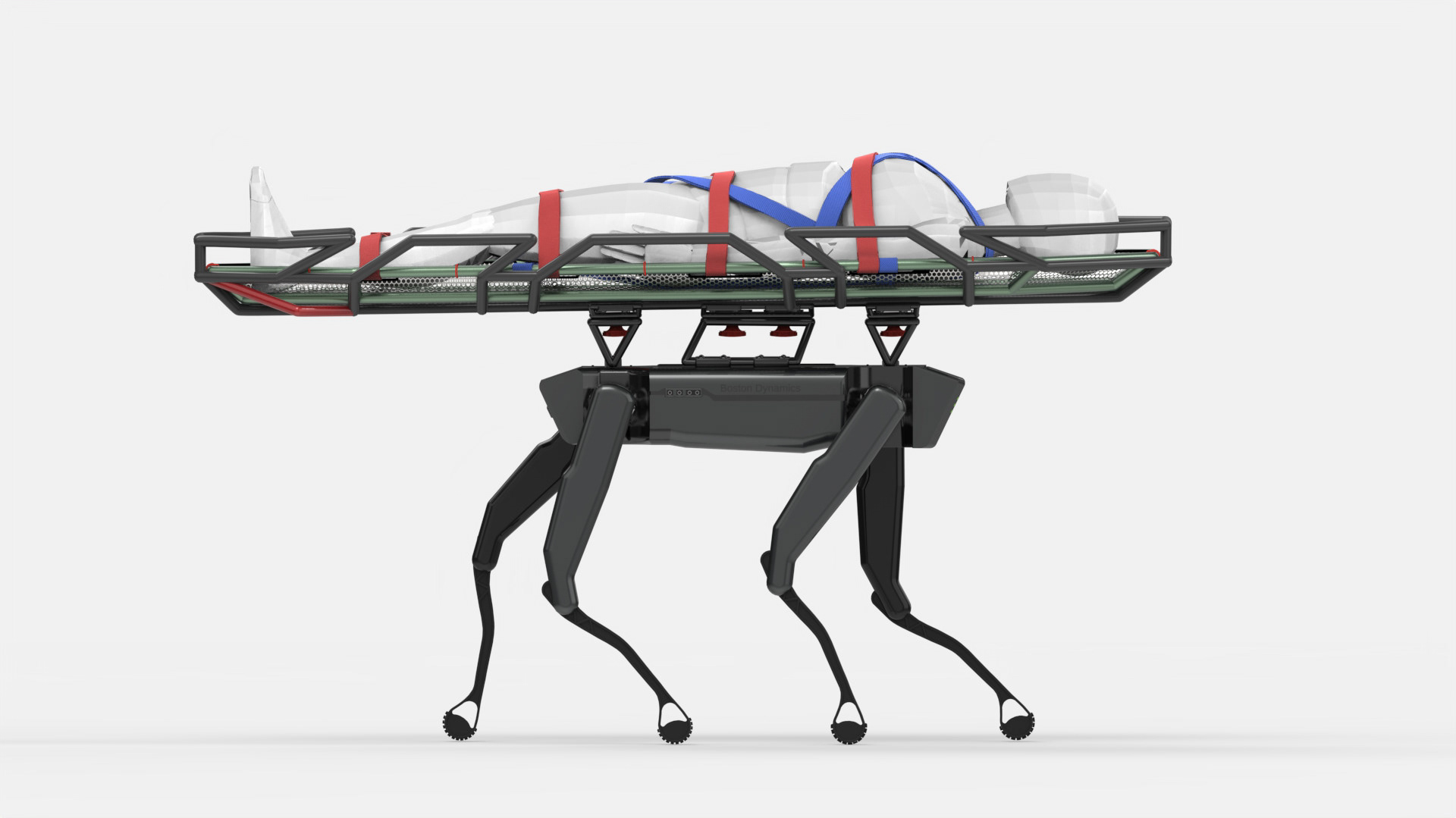
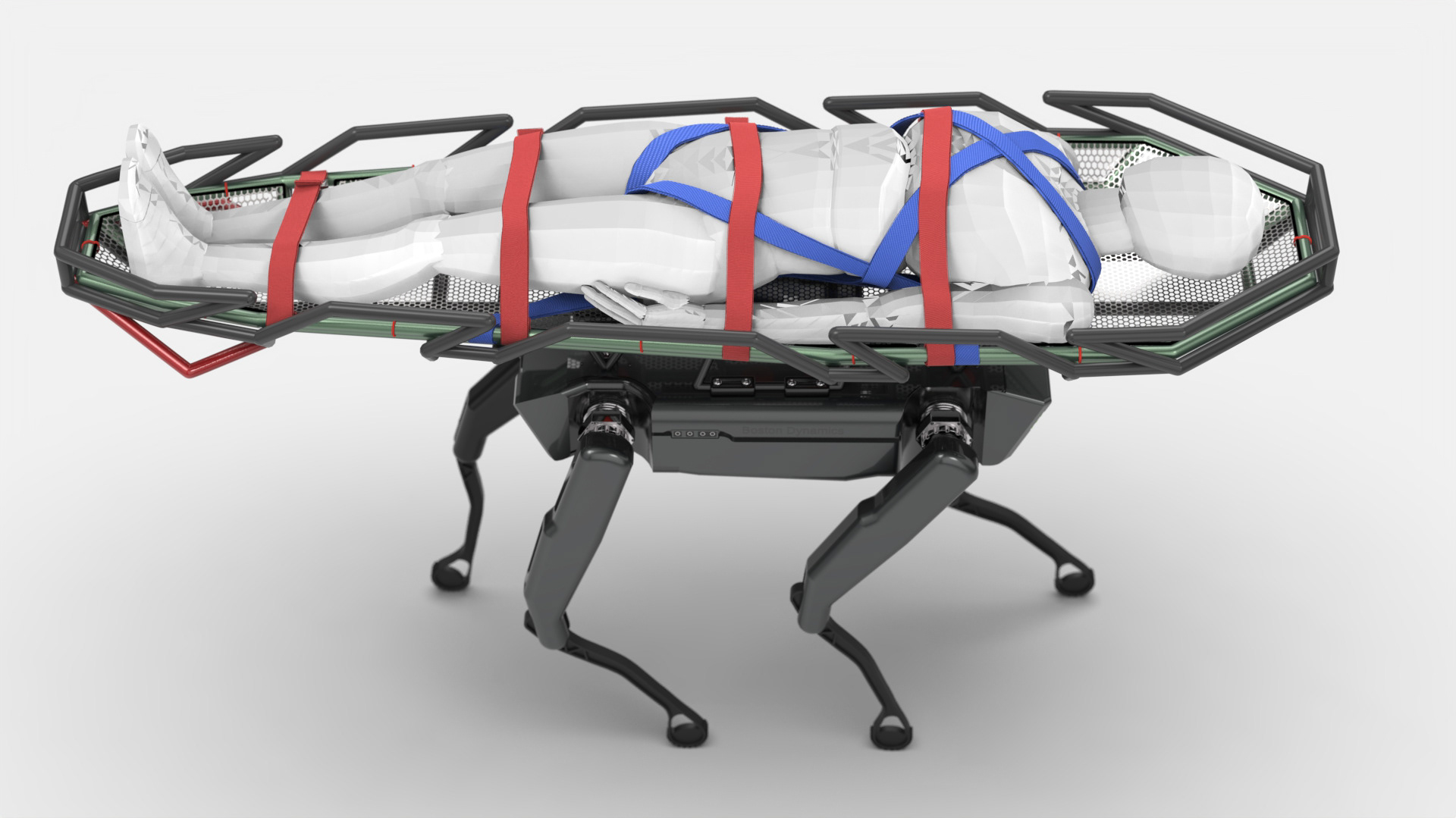
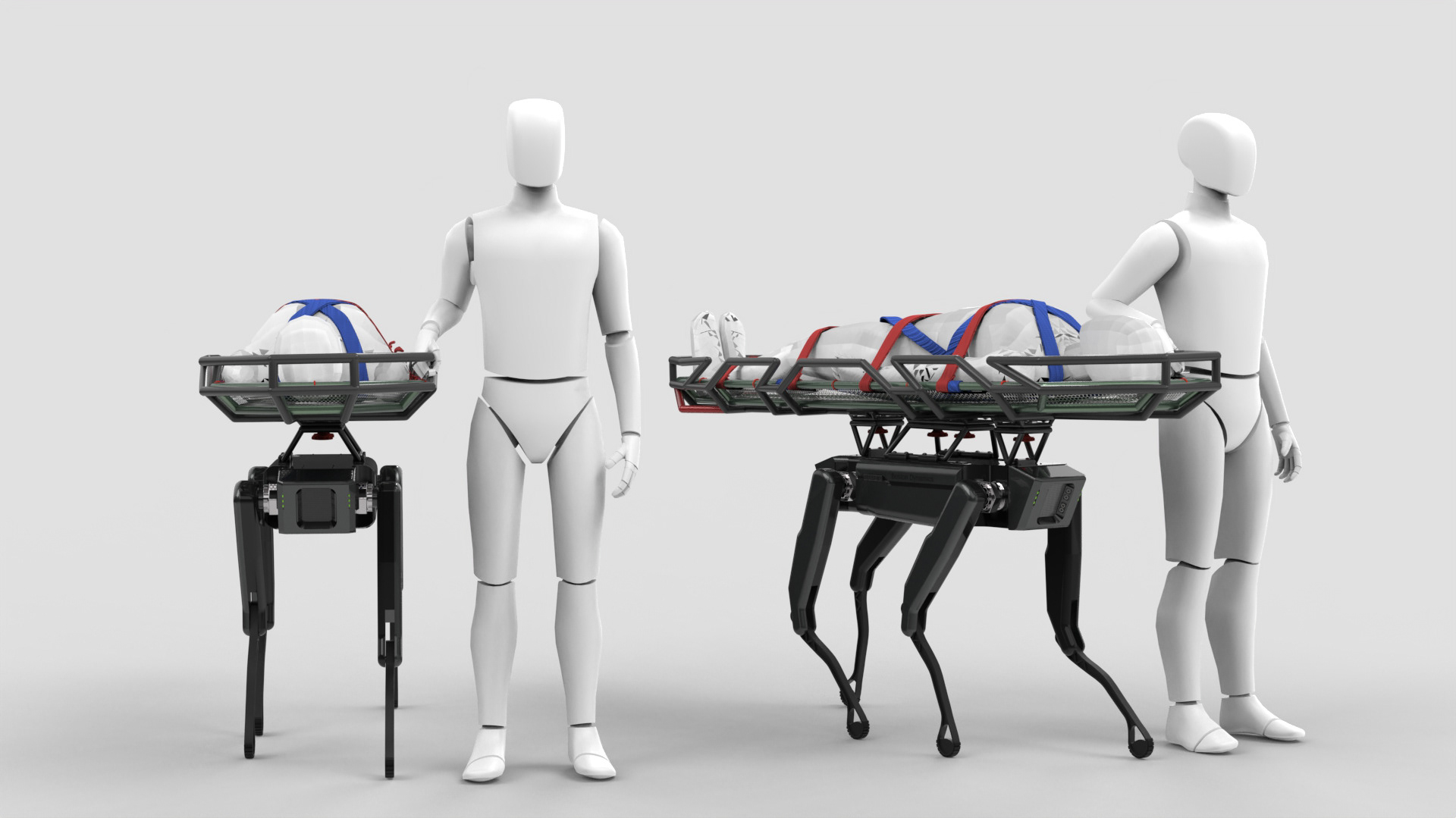
The S-Lock mounting system sets the stretcher at waist hight, allowing the rescuers to comfortably transport patients to the ambulance preserving their energy and saving their backs from injury.